
Antique Botanical Prints for Sale: Authentic Choices
Table of Contents
- What Makes Antique Botanical Prints Valuable
- How to Identify Original Antique Prints
- Hortus Eystettensis: The Premier Botanical Collection
- 19th-Century Botanical Illustrations: Flora Londinensis and Beyond
- Framing Antique Prints for Preservation
- Valuing Antique Botanical Illustrations
- Building Your Botanical Print Collection
- Frequently Asked Questions
Last Updated: September 28, 2026
What Makes Antique Botanical Prints Valuable
Antique botanical prints command premium prices for their blend of botanical science, artistic mastery, and historical significance. Understanding what drives their value is essential before you invest.
The most valuable antique botanical prints are original works from the 17th to 19th centuries, created using traditional printmaking methods like copperplate engraving or hand-colouring that machines couldn't replicate. Rarity matters enormously: many early botanical folios were printed in limited editions, and only a fraction survived with colours intact. A single hand-coloured print from Besler's Hortus Eystettensis represents one of fewer than 300 first-edition copies produced in 1613.

Condition and provenance form the second pillar of value. A print with documented ownership history, minimal foxing (age-related brown spots), and vibrant hand-colouring commands significantly more than a faded copy with water damage. Acid-free, archival-quality paper from the original printing period has survived better than later reproductions on inferior stock.
Collectors increasingly view these prints as tangible investments rather than decoration. The scarcity of authentic examples, combined with growing interest in natural history and botanical art, has created steady appreciation in market value. What once sold for modest sums in the 1990s now trades at auction for multiples of that price.
How to Identify Original Antique Prints
Distinguishing genuine antique botanical prints from modern reproductions requires understanding the technical markers of age and authenticity. The first step is examining the printing technique itself.
Recognising Copperplate Engravings and Hand-Colouring
Copperplate engraving dominated fine botanical illustration from the 1600s through the early 1800s. When you hold an original under light, you'll notice a subtle raised impression where the metal plate pressed into the paper. This plate mark, a visible border where the copper plate ended, is nearly impossible to replicate on modern reproductions. The line work shows hand-drawn variation that digital printing cannot match.
Hand-colouring on original prints shows distinct characteristics. Watercolour pigments from the 17th and 18th centuries had different opacity and hue stability than modern paints. Colours appear slightly uneven, with visible brushstrokes and occasional bleeding at edges, signs of authenticity. Modern reproductions show uniform, flat coverage from giclee or lithographic processes.
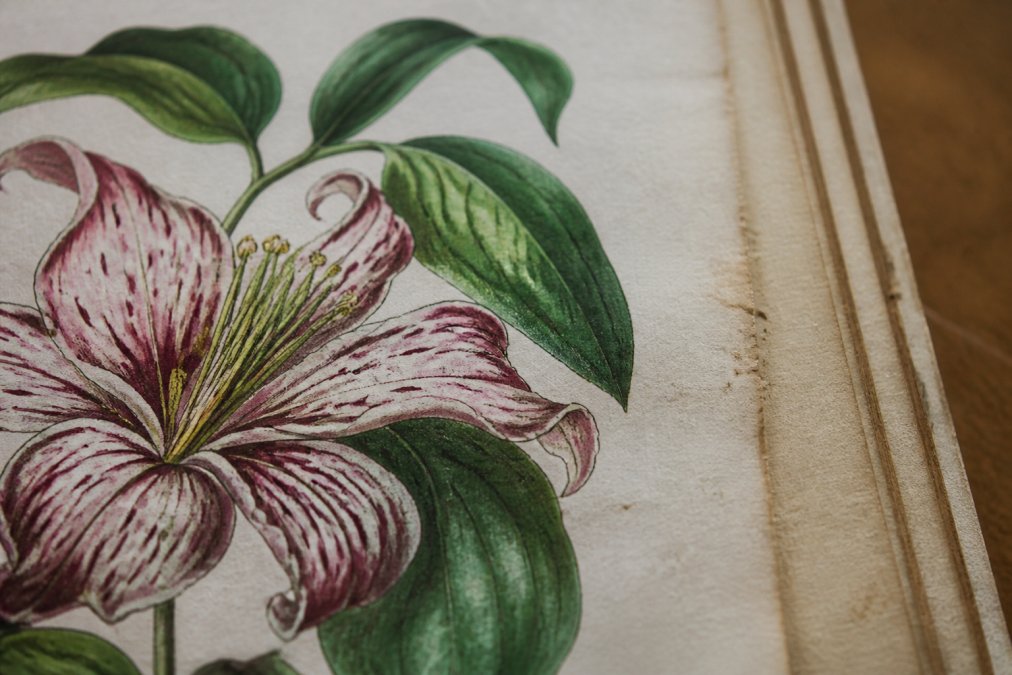
Compare hand-colouring across multiple copies of the same print. Since each was coloured by hand, variations are inevitable. If two "original" prints look identical in every colour shade, one is almost certainly a modern reproduction.
Paper Condition, Foxing, and Age Markers
Genuine antique paper from the 17th and 18th centuries was made from cotton rags, not wood pulp, and has a noticeably different texture and weight. Original paper feels slightly rough and substantial, never slick or uniform.
Foxing (brown spots from iron oxide or environmental exposure) is nearly universal in prints over 150 years old. Absence of foxing should raise suspicion. Genuine foxing appears organically distributed and varies in intensity; artificial foxing appears too uniform or concentrated.
Water damage patterns tell a story. Genuine age damage shows subtle discolouration in corners or edges consistent with storage conditions. Artificial aging on reproductions often looks random or exaggerated.
Hortus Eystettensis: The Premier Botanical Collection
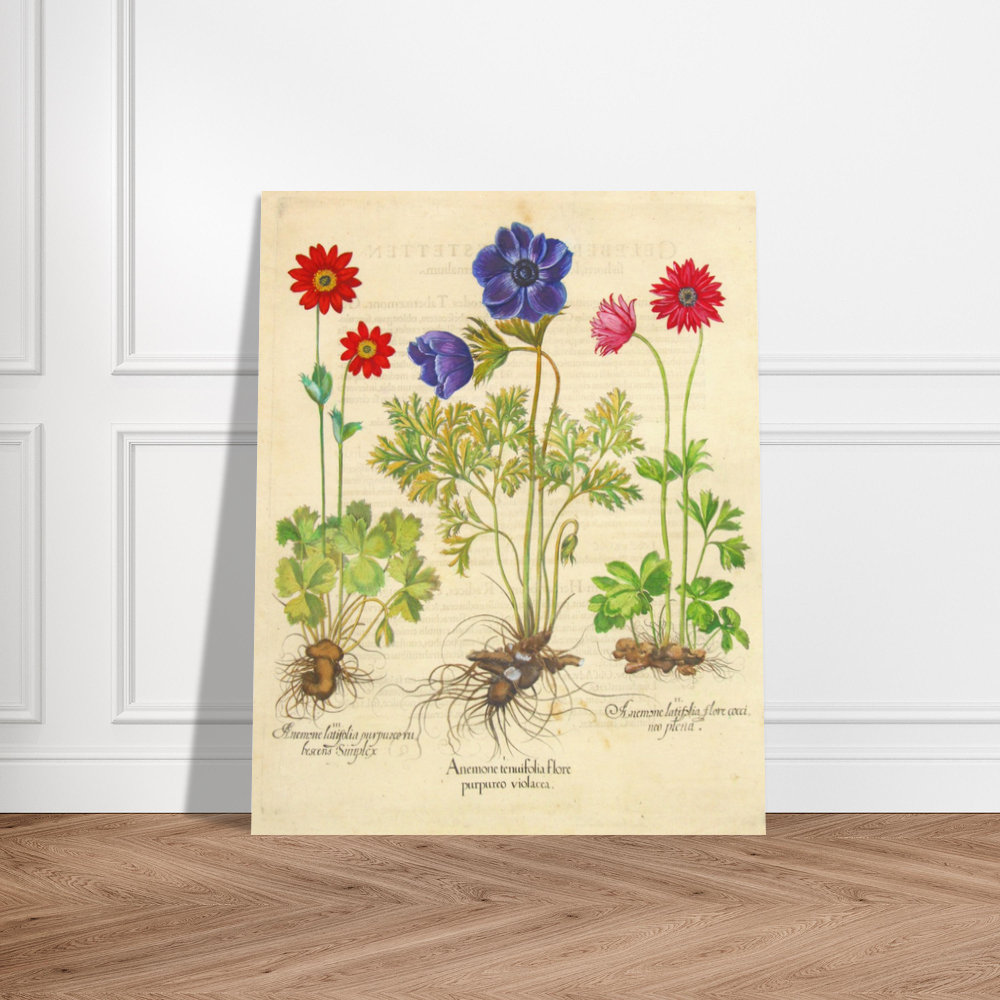
Basilius Besler's Hortus Eystettensis, published in Nuremberg in 1613, stands as the foundational work of European botanical illustration. This monumental folio contains 367 exquisitely engraved and hand-coloured plates depicting over 1,000 varieties of flowers, herbs, and vegetables from the Prince-Bishop's garden in Eichstätt, many shown at actual size.

Besler's Florilegium and Its Historical Significance
Besler's Hortus Eystettensis revolutionised botanical illustration. Before it, plants were depicted awkwardly, compressed into small spaces with minimal artistic consideration. Besler treated flowering plants as objects of beauty worthy of artistic composition while maintaining botanical accuracy and scientific nomenclature.
Besler, a pharmacist and botanist, worked 16 years to complete the drawings.
Why These 17th-Century Prints Command Premium Prices
Original hand-coloured prints from the 1613 first edition of Hortus Eystettensis now sell for $6,000 AUD per print. This reflects: fewer than 300 copies were produced, only a small percentage were hand-coloured at printing, and survival rates are low due to damage, fading, and loss over four centuries.
Botanicals, Besler Basilus, Cyclamen →
19th-Century Botanical Illustrations: Flora Londinensis and Beyond
While Besler's work dominates the premium market, 19th-century botanical prints offer exceptional value. Flora Londinensis, compiled by William Curtis and engraved by George Graves, represents the golden age of British botanical illustration. Published between 1817 and 1828, these hand-coloured copperplate engravings documented wild flowers within a ten-mile radius of London.

Framing Antique Prints for Preservation
Once you've acquired an authentic antique botanical print, proper framing becomes essential. Poor framing practices can accelerate deterioration, while correct methods will preserve your print for generations.
Acid-Free Matting and Archival Materials
Use acid-free materials throughout framing. Acidic materials, standard cardboard, wood-pulp paper, cheap mat board, chemically degrade prints over time, causing yellowing, brittleness, and structural failure.
Protecting Against Light, Moisture, and Temperature Fluctuations
Environmental conditions are the primary driver of deterioration. Direct sunlight fades colours and weakens fibres. Position prints away from windows or use UV-filtering curtains. Indirect, ambient lighting is ideal.
Valuing Antique Botanical Illustrations
Understanding how the market values antique botanical prints helps you make informed purchasing decisions and assess whether a print represents fair value.
Provenance, Rarity, and Market Demand
Provenance (documented ownership history) is often the largest value determinant after age and condition. A print with known provenance, particularly from respected collections or institutions, commands a significant premium.
Investment Potential and Long-Term Appreciation
Antique botanical prints have demonstrated consistent appreciation over 20-year periods. Authentication and condition are the most reliable predictors of future value. Museum-quality originals with impeccable provenance appreciate more reliably than damaged prints with questionable origins.
Building Your Botanical Print Collection
Developing a meaningful collection requires strategy. Whether you're motivated by investment potential, aesthetic appreciation, or scholarly interest, the principles of thoughtful curation apply.
Original Prints vs. High-Quality Reproductions
The decision between original antique botanical prints and high-quality reproductions depends on your budget, aesthetic goals, and investment intentions. Originals offer authenticity, rarity, and investment potential, a tangible connection to art history, irreplaceable and increasingly scarce.
Curating by Subject, Period, and Display Style
A cohesive collection tells a story. Curate by botanical subject (roses, orchids, ferns across periods), historical period (timeline from Besler through 19th-century British prints), or period decor (Victorian homes with 19th-century prints, minimalist interiors with 18th-century studies).
| Collection Strategy | Best For | Example Approach |
|---|---|---|
| Single Subject Focus | Deep visual coherence | Assemble 8-12 rose varieties across different artists and periods |
| Period-Based Curation | Historical narrative | Create timeline from 1600s Besler through 1800s Curtis |
| Mixed Period & Subject | Maximum visual interest | Combine rare originals with high-quality reproductions in complementary subjects |
| Investment-Focused | Long-term appreciation | Acquire authenticated originals with strong provenance and condition |
Frequently Asked Questions
How can you tell if a botanical print is an original antique?
Authentic antique botanical prints display specific markers: hand-applied colour that varies slightly across the print, visible plate marks from copperplate engraving, aged paper with natural foxing (brown spots), and period-appropriate paper texture. Original prints from the 17th and 18th centuries show signs of age including slight discolouration and brittle edges. Reproductions lack the tactile quality and inconsistencies of hand work. Examine the paper under magnification and check for a maker's mark or artist signature to verify authenticity.
Are antique botanical prints worth anything as an investment?
Yes, antique botanical prints hold genuine investment value, particularly rare examples like those from Hortus Eystettensis (c1613), which command prices from $6,000 upwards. Rarer prints appreciate over time due to scarcity and historical significance. Factors affecting value include artist reputation, condition, provenance, and botanical subject matter. Hand-coloured copperplate engravings from the 17th and 18th centuries typically appreciate more than later reproductions. Collectors and museums actively seek authenticated pieces, creating stable demand.
What is the difference between an original antique print and a reproduction?
Original antique prints are hand-coloured copperplate or lithographic engravings created centuries ago, featuring visible engraver marks, natural paper aging, and inconsistent hand-colouring. Reproductions are modern recreations using contemporary printing techniques like giclee or offset printing, which produce uniform colour and lack plate marks. Originals show archival quality paper with foxing and patina; reproductions use modern acid-free paper without age characteristics. Original prints from established collections cost significantly more but offer historical authenticity and investment potential that reproductions cannot match.
How should I frame and preserve an antique botanical print?
Use acid-free matting and archival-quality framing materials to prevent deterioration. Mount the print using conservation-grade adhesive or corner pockets that allow for future removal without damage. Choose UV-protective glass to shield against light fading, and avoid direct sunlight exposure in your home. Maintain stable temperature and humidity levels between 45-55% relative humidity to prevent foxing and paper brittleness. Never use standard frame shop materials, as acidic paper and adhesives cause irreversible damage. Professional conservation framing protects your investment for future generations.
What are the most sought-after botanical print collections?
Hortus Eystettensis (The Garden of Eichstätt) by Basilius Besler remains the most prestigious, featuring over 1,000 hand-coloured copperplate engravings from 1613. Flora Londinensis by William Curtis (1817-1828) is highly valued for its detailed wild flower depictions and historical documentation of London's botanical heritage. Both collections feature scientific nomenclature and artistic composition that set standards for botanical illustration. Original prints from these collections are rare; authenticated examples command premium prices. High-quality reproductions offer access to these iconic works at lower investment levels.