
Identify Hand-Coloured Lithographs: A Beginner's Guide
Last Updated: October 22, 2026
Quick Summary
Hand-coloured lithographs are original prints drawn on stone or metal, inked and printed on paper, then finished with hand-applied watercolours or oils by a skilled colourist. Identify authentic examples by checking for a pencil signature and edition number in the margin, examining the paper texture for antique fibres, and looking for slight gaps where hand-applied colour overlaps the printed black-and-white lines.
- Original hand-coloured lithographs carry a pencil signature and edition number like 5/100 in the margin, while reproductions rarely have these marks.
- Authentic prints show smooth, continuous lithographic lines and gentle tonal gradation, unlike engravings which have sharp V-shaped cuts and visible hatching.
- Hand-applied colour sits slightly raised on the paper with soft, feathered edges and small misalignments at printed outlines, while printed colour aligns perfectly and lies flat.
- Antique paper has rough texture with visible fibres, deckled edges, and natural aging spots, whereas modern reproductions are smooth with uniform whiteness.
- Consult a conservator before purchasing high-value pieces to verify authenticity, assess condition, and obtain written documentation for insurance.
Table of Contents
- What Hand-Coloured Lithographs Are and How They're Made
- How to Tell If a Lithograph Is Original
- How to Identify Lithograph Printing Marks
- Lithograph Versus Engraving: Key Differences
- Antique Print Paper and Watermark Identification
- Distinguishing Hand-Applied Colour From Printed Colour
- Safe Inspection and When to Consult a Specialist
- Frequently Asked Questions
What Hand-Coloured Lithographs Are and How They're Made
A hand-coloured lithograph is an original print drawn on a stone or metal plate, then inked and printed on paper. After printing, an artist applies colour by hand using watercolours, oils, or other pigments, making each print unique even within the same edition.
Lithography relies on oil and water not mixing. An artist draws on a prepared stone with a greasy crayon or ink, then chemicals make the drawn areas accept oil-based ink while blank areas repel it. Paper pressed against the stone transfers the black-and-white image. What separates hand-coloured lithographs from mass-produced prints is the next step: skilled colourists apply pigment by hand, often using stencils or careful brushwork.

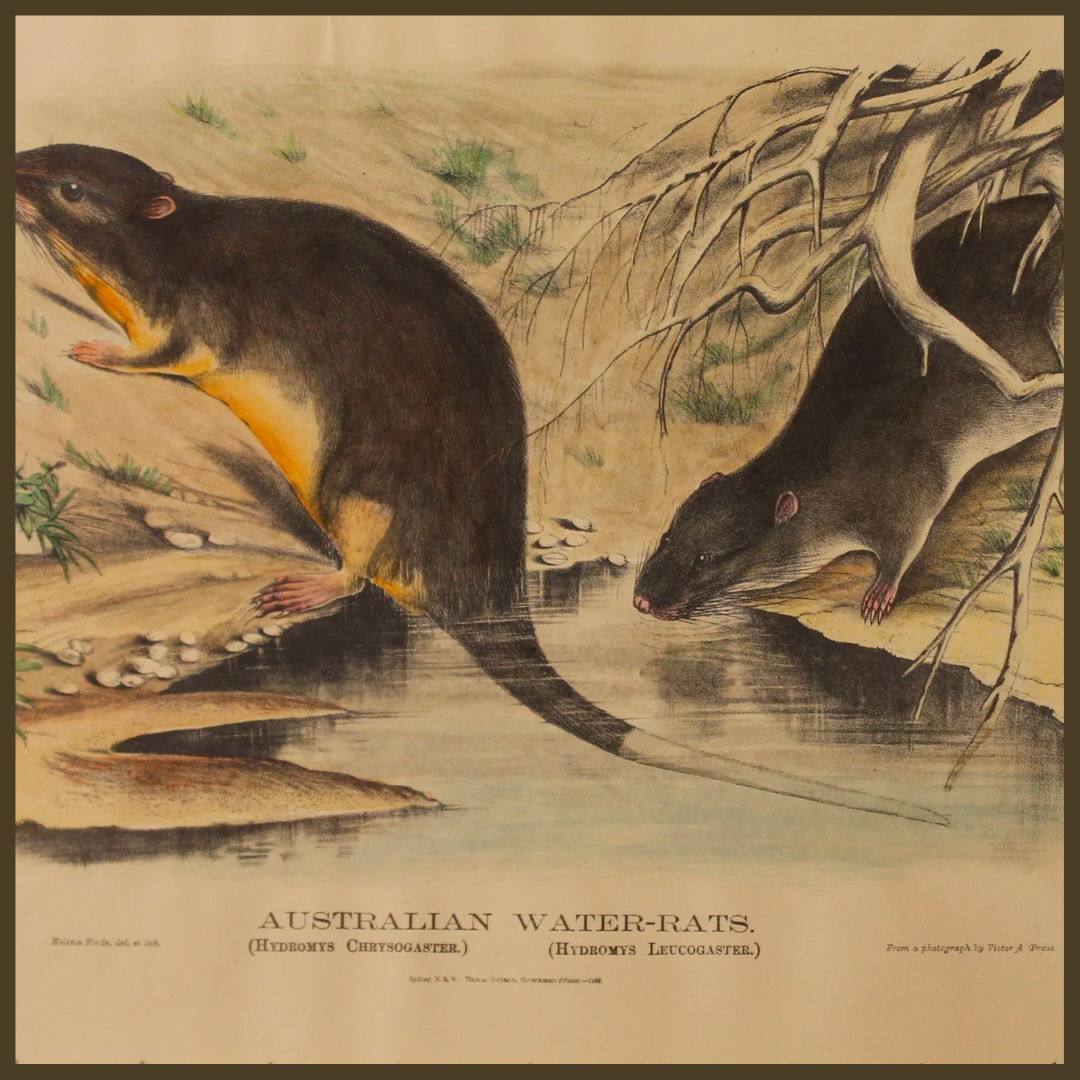
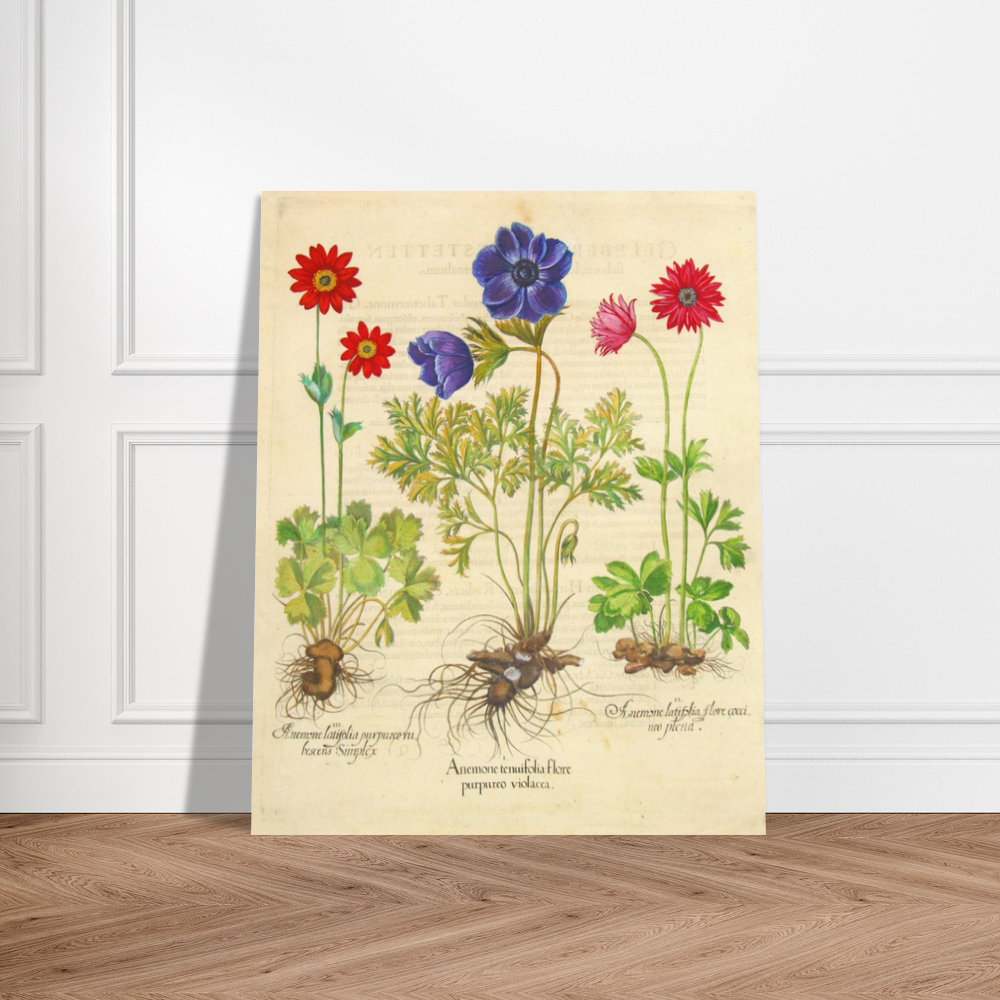
The technique flourished in the 19th century, when publishers produced hand-coloured lithographs of botanical specimens, birds, fashion plates, and natural history subjects. Printed line work combined with hand-applied colour created affordable yet beautiful prints that brought art into middle-class homes. At Antiquarian Print Shop, we work with collectors who seek these originals for their historical value and aesthetic appeal.
Understanding how hand-coloured lithographs were made is your first step toward identifying authentic examples, since the process left specific marks on paper and ink.
How to Tell If a Lithograph Is Original
An original lithograph is a print pulled directly from the artist's stone or plate during their lifetime or shortly after, as part of a limited edition.
The easiest way to spot an original is to look at the edition number and artist's signature. Original hand-coloured lithographs typically carry a pencil signature (not printed) and an edition number in the margin, such as "5/100" (fifth print of one hundred).

Feel the paper. Original lithographs have a distinct tactile quality: ink sits slightly raised, and you can sometimes feel the stone's grain. Reproductions feel flatter and smoother because offset printing deposits ink more evenly.
Examine the margin. Original hand-coloured lithographs often show aging: subtle foxing (brown oxidation spots), discolouration, or handling marks. Reproductions are printed on modern paper with uniform whiteness, and their age spots often look artificial or uniform, whereas authentic aging appears random and gradual.
Look for a plate mark, an embossed edge where the stone or plate pressed into the paper.
Check the back. Original lithographs sometimes carry stamps, labels, or handwritten notes from previous collectors, dealers, or institutions. These provenance marks add credibility and help date the print; reproductions lack this layered history.
How to Identify Lithograph Printing Marks
Lithographs leave distinctive visual clues on the paper. Learning to spot these marks helps you distinguish them from engravings, etchings, and other printmaking methods.
Line quality is the most obvious difference. Lithographic lines are smooth and continuous, lacking the sharp, V-shaped cuts of engravings or the scratchy look of etchings.
Tonal gradation in lithographs is gentle and gradual. Artists shaded by varying the density of dots or lines, creating soft transitions that give hand-coloured lithographs a painterly quality.
Look for halftone patterns or dot clusters. Some lithographs, especially later 19th-century ones, used dots to create tone, visible under a magnifying glass as a regular pattern. Modern digital reproductions may also show dots, but they look more uniform and mechanical.
Colour registration is the alignment of colour layers. In hand-coloured lithographs, the black-and-white image is printed first, then colour is applied by hand, so it often sits slightly on top of the printed lines rather than perfectly aligned.
Examine the paper surface texture. Lithographic presses applied significant pressure, sometimes creating subtle embossing or flattening of the paper fibres. Reproductions, made with lighter pressure, don't show this effect.
Lithograph Versus Engraving: Key Differences
Understanding the differences between lithographs and engravings helps you identify which printmaking technique was used to create a print you're examining.
Engravings are created by hand-carving lines into a metal plate (usually copper or steel) with a burin.
Lithographs, by contrast, are made on a flat surface (stone or metal). The image is drawn, not carved. No grooves exist, so there's usually no plate mark.
Line characteristics differ sharply. Engraved lines are sharp and V-shaped in cross-section, showing tiny variations in width and depth under magnification that reflect the engraver's hand pressure. Lithographic lines are smooth and uniform, with no carving marks.
Tone and shading reveal the technique. Engravings rely on hatching, parallel lines laid close together to create shadow and depth, remaining visible even in dark areas.
Impressions from engraved plates show wear over time: early ones are crisp and dark, later ones lighter and less defined. Lithographic stones also wear, but more gradually and subtly. Reproductions don't show this wear progression.
Cost and purpose differed historically. Lithographs were faster and cheaper, ideal for popular prints, fashion plates, and botanical illustrations sold to a broad audience.
Antique Print Paper and Watermark Identification
The paper itself tells you a great deal about a print's age and authenticity. Antique hand-coloured lithographs were printed on paper made from cotton or linen fibres, which age differently than modern wood-pulp paper.
Animals: BRODTMANN, Karl Joseph, Rhinoceros, Original, Rare, Lithograph, c1830 →
Feel the paper. Antique paper has a distinctive, slightly rough texture with visible fibre variation, while modern reproductions are smooth and uniform. Running a finger across an original reveals subtle irregularities that modern manufacturing eliminates.
Look for a watermark. Hold the print to strong light for a faint mark embedded in the fibres.
Check the paper colour. Antique paper has aged to cream or pale yellow tones, and bright white suggests a modern reproduction. Some originals were printed on whiter paper, though, so white alone doesn't prove a reproduction.
Examine the edges. Original prints often have deckled edges, rough, irregular margins from hand-made paper. Reproductions have clean, machine-cut edges. A deckled edge consistent with the paper's age is a positive sign of authenticity.
Foxing and age spots are common on antique paper, forming when iron compounds oxidize over time.
At Antiquarian Print Shop, we carefully examine paper quality and provenance when acquiring original hand-coloured lithographs. The paper itself becomes part of the print's story.
Distinguishing Hand-Applied Colour From Printed Colour
This is where many beginners struggle. Some lithographs were printed in colour using multiple stones or plates (one for each colour).
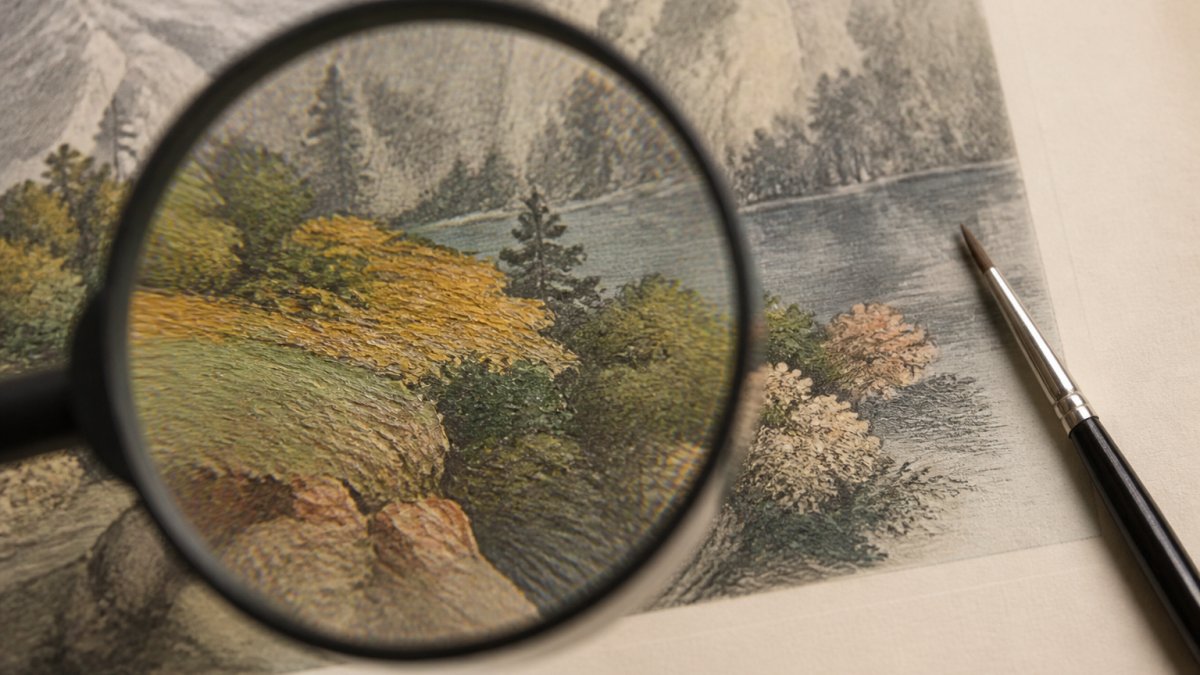
Hand-applied colour sits on top of the printed black-and-white image. Look closely at where colour meets the printed line.
Run your finger gently across a hand-coloured area (if you're examining your own print). Hand-applied colour sometimes has a slightly raised or textured feel.
Printed colour (from multiple stones or plates) aligns perfectly with the printed lines. There are no gaps or overlaps. The colour coverage is even and consistent across the entire print.
Examine the edges of coloured areas. Hand-applied colour often has soft, slightly feathered edges where the brush stroked the pigment.
Look at colour density and variation. Hand-coloured prints show subtle variations in pigment intensity. One area might be slightly darker or lighter than another, reflecting the colourist's technique.
Check for colour outside the lines. Hand colourists sometimes strayed slightly beyond the printed outlines, especially on busy or detailed prints. This is normal and expected.
Some lithographs combined both techniques: printed colour for large areas, then hand-applied colour for details or highlights. These prints are particularly interesting because they show both methods.
Safe Inspection and When to Consult a Specialist
Examining hand-coloured lithographs requires care. These are delicate objects, and improper handling can damage them.
Use proper tools. A soft brush or cotton glove protects the print's surface. Never touch the print directly with bare hands, skin oils can damage the paper and pigment over time.
Avoid moisture and direct light. Never breathe on a print or allow moisture near it. Water damages paper and causes pigment to run or fade. Keep prints away from direct sunlight, which fades hand-applied colours over time.
Know your limits. Some questions require expert evaluation. If you're considering purchasing a hand-coloured lithograph as an investment, consult a conservator or print specialist before committing significant money.
When to seek expert help:
- The print's age or origin is unclear
- You suspect alterations or repainting
- The print shows significant damage or deterioration
- You're purchasing a high-value piece
- Provenance documentation is incomplete or questionable
- The print's condition affects its value substantially
A professional conservator can perform technical analysis that goes beyond visual inspection. They can examine the paper under ultraviolet light to spot repairs or alterations. They can test pigments to confirm they're period-appropriate.
At Antiquarian Print Shop, we work with conservators and specialists to verify the authenticity and condition of every hand-coloured lithograph in our collection.
Identifying authentic hand-coloured lithographs takes practice, but the fundamentals are learnable. Start by examining the paper, looking for printing marks, and checking for hand-applied colour.
| Inspection Element | What to Look For | What It Tells You |
|---|---|---|
| Paper texture and feel | Rough, irregular fibres; slight imperfections | Likely antique; modern paper is uniform and smooth |
| Watermark | Visible under strong light; matches era and region | Confirms papermaker and approximate date |
| Signature and edition | Pencil-written marks in margin (e.g., "5/100") | Strong indicator of originality; reproductions lack these |
| Plate mark | Embossed edge where stone pressed into paper | Present in originals; absent in most reproductions |
| Line quality | Smooth, continuous lines (not carved or scratched) | Confirms lithography method; engravings show V-shaped cuts |
| Colour alignment | Slight gaps or overlaps at colour edges | Hand-applied colour; printed colour aligns perfectly |
| Foxing and aging | Random brown spots; colour variations in margins | Natural aging; uniform spots suggest artificial treatment |
| Tonal gradation | Soft transitions; dot patterns visible under magnification | Characteristic of lithographic printing technique |
Frequently Asked Questions
How can you tell whether colour was added by hand to a hand-coloured lithograph?
Hand-applied colour sits on top of the printed image and often shows visible brushstrokes, uneven coverage, or slight variations in pigment density. Printed colour, by contrast, is uniform and sits flat within the paper fibres. Examine the piece under magnification: hand-coloured areas may show overlap at edges where the artist's brush extended beyond the black printed lines, whilst printed colour aligns precisely with the lithographic image. Pigment texture also differs, hand-applied watercolour or gouache has a slightly raised surface, whereas printed ink lies flush with the paper.
What is the difference between a lithograph and an engraving?
Lithographs are drawn on stone or metal plates using a greasy crayon or ink, then printed using oil and water repulsion. Engravings are carved or incised into a metal plate, creating grooves that hold ink. The key visual difference: engravings show a plate mark (a raised border where the plate pressed into paper), whilst lithographs typically do not. Engraving lines are uniformly sharp and precise; lithograph lines can vary in width and have a softer, more organic quality. Engravings often display parallel lines (hatching) for shading, whilst lithographs use tonal gradation or dots (halftone patterns).
Are lithographs always numbered and signed by the artist?
No. Many 19th-century lithographs, especially commercial or botanical prints, were unsigned or bore only the publisher's mark. Edition numbers became standard practice later in the 19th century and into the 20th century. A missing signature or number does not indicate a reproduction or forgery, it reflects the printing conventions of the period. Pencil signatures in the margin are more reliable than printed signatures, as they were typically added by hand after printing. Always research the artist and period to understand what documentation you should expect.
How do I know if my hand-coloured lithograph is valuable?
Value depends on artist reputation, rarity, condition, provenance, and subject matter. Botanical and bird prints from the 1800s by known naturalists command higher prices. Original hand-coloured impressions are worth significantly more than reproductions. Condition matters greatly: foxing (age spots), staining, and fading reduce value. Provenance, documented ownership history, adds credibility and value. For a reliable valuation, consult a print specialist or conservator rather than relying on online comparisons. Antiquarian Print Shop's curated collection includes authenticated pieces with documented provenance to help collectors make informed investment decisions.