
Preserve Vintage Lithographs: A Step-by-Step Guide
Table of Contents
- Why Preserving Vintage Lithographs Matters
- Step 1: Assess Your Print's Condition and Materials
- Step 2: Control Temperature and Humidity for Long-Term Storage
- Step 3: Choose Acid-Free Storage Methods and Materials
- Understanding the Risks of Storing Antique Prints in Basements
- Step 4: Select Archival Framing Materials for Vintage Prints
- Step 5: Prevent Foxing on Antique Prints Through Proper Handling
- Step 6: Handle and Clean Techniques for Vintage Lithographs
- Step 7: Digital Preservation and Documentation
- Common Mistakes to Avoid When Preserving Vintage Lithographs
- Frequently Asked Questions
Last Updated: September 18, 2026
Why Preserving Vintage Lithographs Matters
Vintage lithographs fade, yellow, and deteriorate without proper care. Collectors can lose irreplaceable pieces to preventable damage.
Light breaks down pigments, humidity causes paper to absorb moisture and expand, temperature swings stress fibres, and acid eats through paper from the inside out.
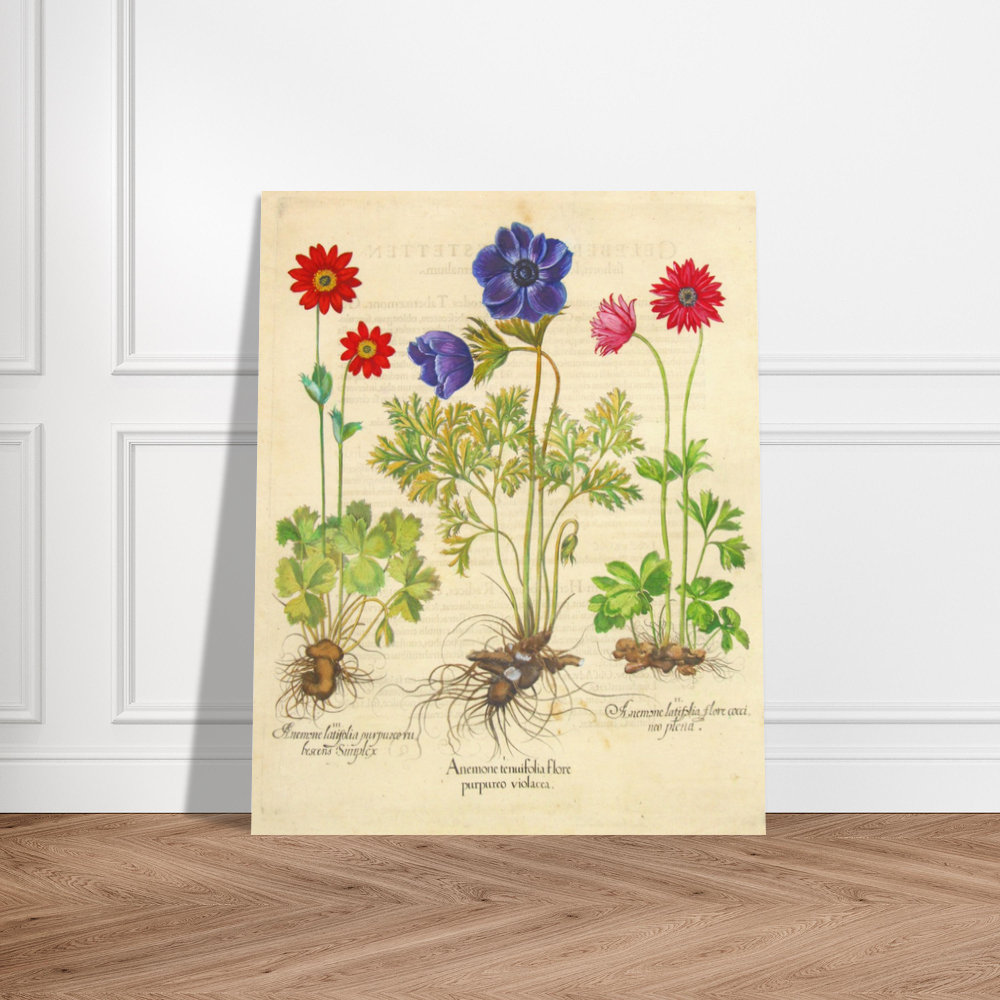
This guide covers seven essential steps to preserve vintage lithographs, whether rare Brodtmann pieces or botanical prints from the Forest Flora of South Australia collection.

Step 1: Assess Your Print's Condition and Materials
Examine your print for foxing, stains, tears, or fading. Check the paper type and flexibility. Understanding its current state tells you what preservation approach to take.
Foxing appears as brown or rust-coloured spots formed when iron particles react with moisture and oxygen. It won't spread if you control humidity, but won't disappear on its own.
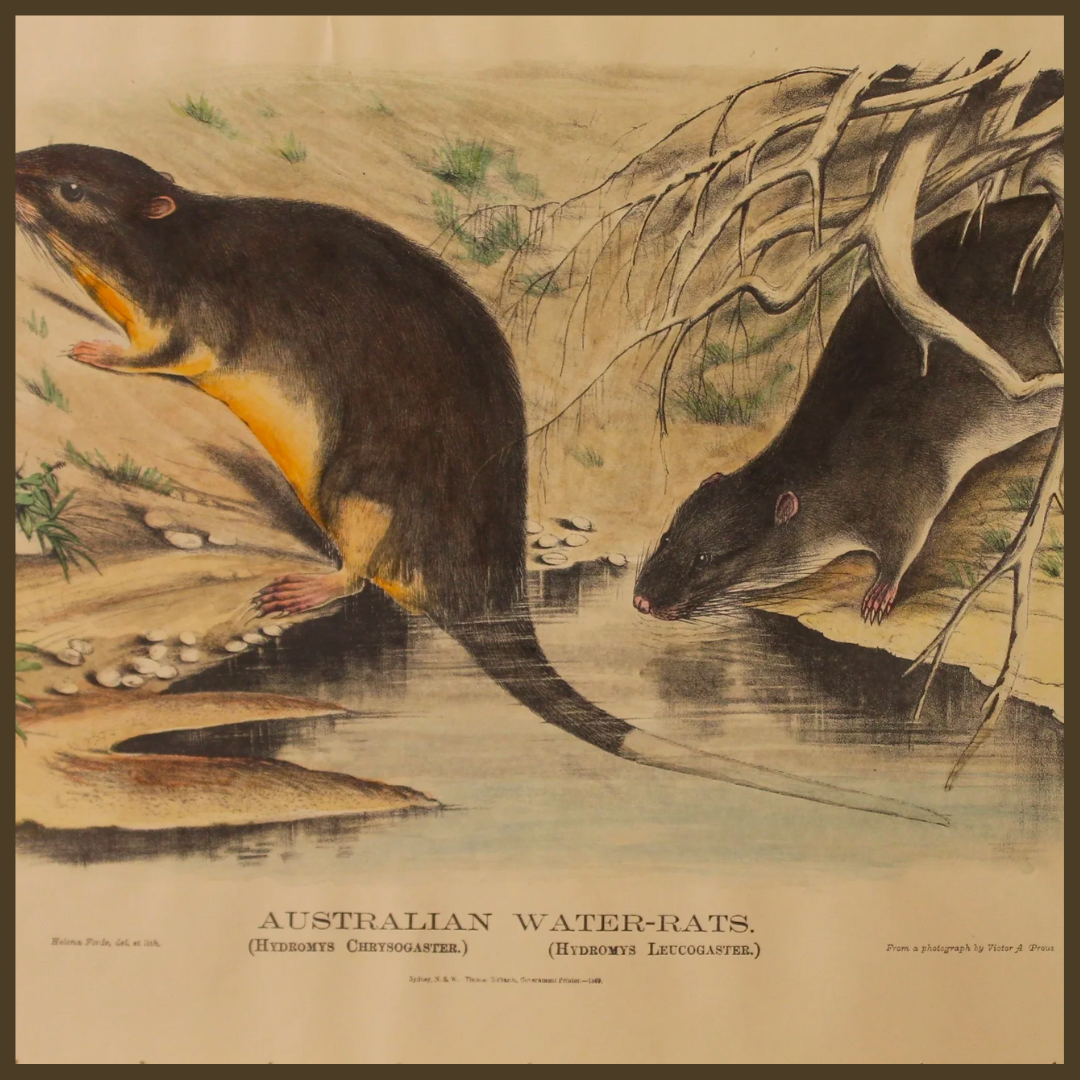
Identify the printing technique. Hand-coloured lithographs, like the Brodtmann kangaroo and philanger print, have additional vulnerability as hand-colouring pigments fade faster than the printed image.

| Print Issue | What It Means | Next Step |
|---|---|---|
| Foxing (brown spots) | Paper exposed to high humidity | Control humidity immediately |
| Yellowing | Age and light exposure | Reduce light exposure going forward |
| Brittleness | Paper has lost moisture and flexibility | Maintain 45-55% relative humidity |
| Tears or creases | Physical damage | Handle with gloves; avoid further bending |
| Fading | Pigment breakdown from light | Move away from windows and bright areas |
Most vintage lithographs are tougher than they look. Proper storage stops further deterioration and slows fading considerably.
Step 2: Control Temperature and Humidity for Long-Term Storage
Vintage lithographs survive best when temperature and humidity stay consistent. Fluctuations cause paper to expand and contract, weakening fibres and causing cracking.
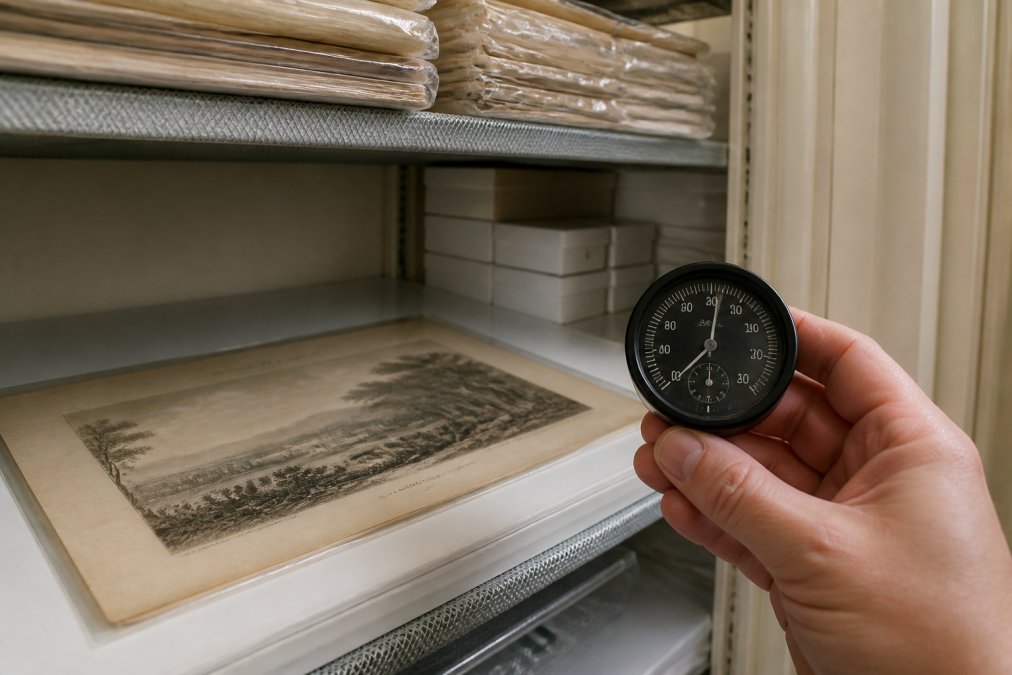
Aim for 18-21°C and 45-55% relative humidity, which mimics museum storage conditions and prevents both drying and moisture absorption.
Basements are dangerous for prints, they're damp, flood-prone, and sit at 60-70% humidity, accelerating foxing and mould. Attics cause rapid fading and brittleness. Kitchens and bathrooms create humidity spikes.
The best storage location is a climate-controlled interior room away from external walls, such as a bedroom closet or living room cabinet. The key is consistency year-round.
If perfect conditions aren't possible, a cool, dry interior space beats a damp basement. Even imperfect stability is better than wild swings.
Step 3: Choose Acid-Free Storage Methods and Materials
Paper degrades when it contacts acidic materials. The wrong storage box or mounting tape will slowly destroy a print from the outside in.
All materials touching your lithograph must be acid-free and lignin-free. Cheap cardboard boxes contain both and are the enemy of vintage prints.
Use archival-quality storage boxes made from alkaline buffering materials to maintain neutral pH. They cost more but extend print life from 50 to 200 years.
For interleaving between prints, use acid-free conservation tissue. Never use regular tissue, newspaper, or plastic wrap, which trap moisture or contain acid.
Store prints flat, never rolled. Rolling creates permanent creases. Flat storage distributes weight evenly and prevents bending.
Never use rubber bands, paper clips, or regular tape. Use acid-free mounting tape or archival clips instead.
Understanding the Risks of Storing Antique Prints in Basements
Basements seem logical for storage but are one of the worst places for vintage lithographs.
Basements stay damp as moisture wicks from the ground. Humidity often sits at 60-75%, accelerating foxing, encouraging mould, and causing paper brittleness.
Basements flood during heavy rain, burst pipes, or groundwater seepage, destroying irreplaceable prints instantly. Insurance rarely covers water damage to stored items.
Temperature swings in basements create expansion and contraction cycles that weaken the print's structure over time.
Basements attract pests, silverfish, cockroaches, and rodents eat paper and chew through prints. Once established, they're hard to eliminate.
The risks of basement storage outweigh convenience. If it's your only option, use sealed boxes with desiccant packets and check regularly for moisture or pests. Move prints to a climate-controlled interior space as soon as possible.
Step 4: Select Archival Framing Materials for Vintage Prints
Proper framing protects displayed lithographs. Museum-grade framing uses reversible mounting and acid-free materials.
Use UV-protective glass or acrylic to block ultraviolet light that fades pigments. Regular glass offers no protection.
Mat board must be acid-free and alkaline buffered. Standard mat board causes yellowing and brittleness. Archival mat board costs more but lasts centuries.
Use conservation tissue or polyester sleeves to separate the print from the mat, preventing contact with acidic materials and allowing future removal without damage.
Never use rubber cement, spray adhesive, or masking tape. Use archival adhesive or mounting corners that hold the print without touching its surface.
Use acid-free board for backing. Acidic backing leaches acid into the print from behind.
Animals: Brodtman, Karl Joseph →
Avoid glass sitting directly against the print. Direct contact traps moisture and encourages mould growth.
Step 5: Prevent Foxing on Antique Prints Through Proper Handling
Foxing forms when iron particles react with moisture and oxygen. Prevention requires controlling humidity, minimising handling, and avoiding damp environments.

Handle prints minimally. Wear clean, dry cotton gloves and hold prints by the edges only, never touching the image surface.
Avoid eating, drinking, or smoking near prints. Crumbs attract pests. Spills cause stains. Smoke deposits particles on paper.
Store prints away from moisture sources. Kitchens, bathrooms, and laundry rooms are high-risk. An interior closet or bedroom cabinet is ideal.
If foxing appears, resist cleaning it. Cleaning attempts often spread damage or remove ink. Professional conservators can assess whether treatment is safe.
Foxing prevention requires low humidity, minimal handling, and stable storage.
Step 6: Handle and Clean Techniques for Vintage Lithographs
Handling and cleaning are different. Both require care.
Use both hands to support the print evenly from underneath. Never bend or flex a print, as creases and cracks are permanent.
Remove surface dust gently with a soft natural-bristle brush, brushing away from the image. Never use cloth or synthetic brushes.
For anything beyond light dusting, consult a conservator. Home cleaning risks permanent damage to irreplaceable prints.
When retrieving a print from storage, do so slowly and carefully. Check for new foxing or damage before moving it.
Frequent handling increases damage risk. Store prints you want to protect and view them in their frame. For regularly handled prints, keep a reproduction nearby.
Step 7: Digital Preservation and Documentation
Photograph your prints in good lighting to document condition, help with insurance claims, and preserve the image if the physical print is damaged.
Use good resolution and natural light. Photograph the full print and close-ups of damage, foxing, or unique details. Store images in multiple locations.
Document provenance, artist, date, technique, and print history. Include condition notes, acquisition date, damage, and conservation work.
Digital documentation helps with authentication and adds value to rare prints like the Brodtmann kangaroo lithograph.
Keep digital records organised and backed up. If your home is damaged, digital records survive and help with insurance claims and future conservation.
Common Mistakes to Avoid When Preserving Vintage Lithographs
Storing in basements or attics. Prints deteriorate faster in these spaces than anywhere else in a home.
Using regular cardboard boxes. They destroy prints from the outside in over months and years.
Framing with regular glass. Museum-quality glass protects prints from UV fading.
Handling without gloves. Gloves prevent skin oils and dirt from transferring to the print.
Attempting DIY cleaning. Cleaning attempts spread damage or remove ink.
Rolling prints. Always store flat to avoid permanent creases.
Using rubber bands, clips, or tape. Use archival materials only.
Ignoring humidity changes. Monitor humidity and maintain 45-55% year-round.
Frequently Asked Questions
What are the risks of storing antique prints in basements?
Basements expose antique prints to moisture fluctuations, temperature swings, and mould growth that cause irreversible damage. Relative humidity in basements often exceeds 60%, promoting foxing (brown spots from iron oxide in paper), cellulose degradation, and mould. Basement flooding poses catastrophic risk. Store vintage lithographs in climate-controlled spaces with stable humidity between 30-50% and temperature around 18-21°C instead.
How can I prevent foxing on antique prints?
Foxing occurs when lignin and iron compounds in paper oxidise over time, especially in humid conditions. Prevent it by maintaining relative humidity below 50%, storing prints in acid-free, lignin-free containers, and avoiding direct sunlight and UV exposure. Use conservation tissue to interleave prints, keep them flat rather than rolled, and ensure good air circulation. Handle prints with clean hands or cotton gloves to prevent oils from accelerating photodegradation.
What archival framing materials should I use for vintage prints?
Use museum-grade, acid-free mat board, lignin-free backing board, and reversible mounting methods. Avoid adhesive tape and mounting adhesives; instead use polyester sleeves or reversible mounting techniques that don't damage the print. Select UV-protective glass or acrylic to reduce lightfastness loss. Ensure all materials meet preservation standards and contain alkaline buffering to protect against atmospheric pollutants. Interleave with conservation tissue between prints in frames.
How long can vintage lithographs last with proper preservation?
Well-preserved vintage lithographs can last 100+ years when stored in stable conditions with acid-free materials and controlled temperature and humidity. Chromolithographs, like those from the Forest Flora of South Australia collection, are particularly durable when protected from UV exposure and moisture. Digital documentation ensures your collection's provenance survives even if the original print faces unforeseen damage.