
Rare Antique Fashion Illustrations: A Collector's Guide
Table of Contents
- What Makes Rare Antique Fashion Illustrations Valuable
- Understanding Antique Fashion Prints and Their Origins
- Original Fashion Illustrations: Identifying Authentic Works
- French Fashion Illustrations: The Golden Age of Design
- Dating and Attribution: Pinpointing Period and Creator
- Fashion Illustration Reproductions: Quality and Value
- Condition Grading, Conservation, and Display
- Pricing, Investment Potential, and Building Your Collection
- Frequently Asked Questions
Last Updated: October 5, 2026
What Makes Rare Antique Fashion Illustrations Valuable
Rare antique fashion illustrations connect us to art history, capturing the elegance and design of their era. They command attention from collectors and interior designers because they embody both artistic merit and historical significance. At Antiquarian Print Shop, we've spent years curating collections that help clients understand what elevates certain fashion prints from decorative curiosities to genuinely valuable collectibles.
Value in antique fashion illustrations stems from several interconnected factors: the artist's reputation, rarity, printing technique (hand-coloured steel engraving or lithography), condition, provenance, and the publication of origin.
What most guides miss is that value isn't solely determined by age. A Victorian-era fashion plate from a mass-produced periodical may be less valuable than a carefully executed 1920s haute couture illustration from a limited run. The interplay between historical period, artistic quality, scarcity, and preservation condition creates the true valuation equation.
Understanding Antique Fashion Prints and Their Origins
Fashion illustrations emerged as a distinct art form in the 18th century, peaking in the 19th and early 20th centuries. They appeared in fashion magazines, newspapers, and luxury publications aimed at affluent audiences wanting to stay current with Parisian and London trends. Publishing fashion plates, detailed drawings of the latest styles, became essential to how fashion spread across Europe and beyond.
Victorian-Era Fashion Plates
The Victorian period (1837-1901) saw an explosion in fashion illustration. Hand-coloured steel engravings dominated the market, with illustrators documenting elaborate silhouettes and textile innovations. These prints featured elegantly posed figures in the season's most fashionable garments, set against minimal backgrounds that kept focus on the clothing.
Victorian fashion plates were the Instagram posts of their time, showing affluent women exactly what to wear. Publications like La Mode Illustrée employed skilled artists to capture bustles, crinolines, and layered skirts. The skill required to render fabric texture, lace, and jewellery through hand-colouring made these genuine works of art. Collectors prize Victorian fashion illustrations for their combination of historical documentation and artistic achievement.

Early 20th-Century Haute Couture Illustrations
The early 1900s brought a dramatic shift as silhouettes and artistic styles evolved. The rise of haute couture meant prestigious fashion houses began commissioning original artwork to showcase their designs. These illustrations displayed greater artistic freedom than their Victorian predecessors, incorporating Art Deco influences, simplified compositions, and sophisticated colour palettes.
Early 20th-century fashion illustrations appeared in luxury publications and as standalone prints meant for framing. Paper quality improved, printing techniques refined, and artists signed their work more prominently. This era produced some of the most sought-after fashion illustrations among collectors today.
Original Fashion Illustrations: Identifying Authentic Works
Determining whether a fashion illustration is genuinely original or a reproduction requires examining the printing technique, paper composition, age indicators, and evidence of hand-colouring. Collectors approach authentication as a detective process, looking for subtle signs that separate authentic antiques from later reproductions.
Printing Methods and Techniques
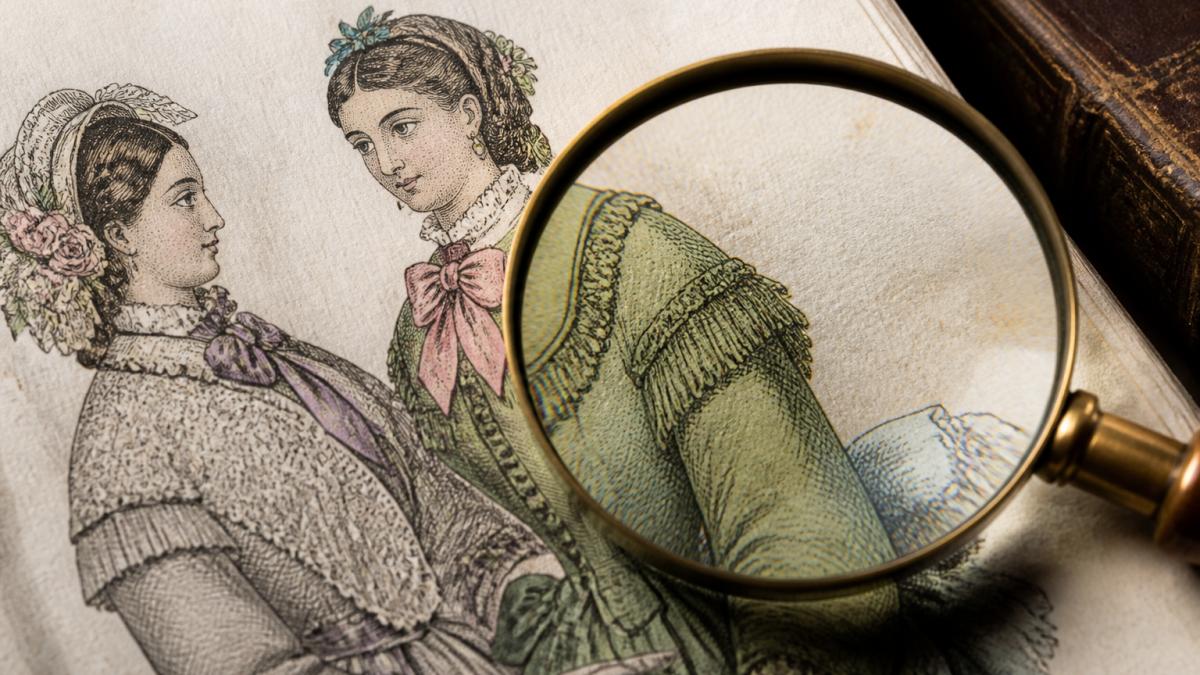
Steel engraving was the most common technique for 19th-century fashion illustrations, particularly from the 1850s through 1890s. The process involved incising an image into a polished steel plate, applying ink, and pressing paper against it under pressure. Skilled artisans then hand-applied watercolour pigments to each print individually, creating the distinctive appearance collectors recognise immediately.
Lithography emerged as an alternative technique for later pieces and larger quantities. Unlike engraving, lithography relies on oil and water not mixing: the image is drawn on stone with a greasy medium, and ink adheres only to those areas. Lithographed fashion illustrations display softer lines and broader colour areas. Identifying the technique provides crucial information about the print's likely date, origin, and production method.
Wood engraving and woodcut techniques appear less frequently but occur in certain publications. These methods produce bolder lines, higher contrast, and a particular texture that experienced collectors recognise immediately. Understanding these distinctions allows you to date illustrations more accurately and assess their rarity.
Paper, Condition, and Age Markers
The paper itself tells a story about authenticity and age. Antique papers from the 19th and early 20th centuries possess distinct characteristics modern papers don't replicate: handmade papers contain visible fibres and irregular surface texture, while machine-made papers show different watermarks and sizing. Examining the paper edge, deckled (naturally irregular) or cut, provides additional authentication clues.
Foxing, the brownish spots on aged paper, serves as an authenticity indicator. These spots result from iron particles reacting with moisture and atmospheric conditions over decades. While foxing reduces aesthetic appeal, its presence in a consistent, age-appropriate pattern suggests genuine age. Prints showing no foxing despite claiming to be 150 years old warrant scepticism.
The hand-colouring itself reveals much about authenticity. Original hand-colouring displays subtle variations in pigment density, occasional overlap where the artist's hand moved, and fading patterns consistent with decades of light exposure. Modern reproductions typically show more uniform colour application and less natural fading.
French Fashion Illustrations: The Golden Age of Design
France, particularly Paris, dominated fashion illustration from the mid-19th century onward. As the undisputed centre of haute couture, the city attracted the finest illustrators, working for prestigious publications and fashion houses. French fashion illustrations possess a distinctive elegance collectors immediately recognise. The combination of exceptional talent, refined publishing standards, and the prestige of French fashion created a golden age lasting roughly from 1860 through the 1930s.
Notable Artists and Publications
Jules David stands among the most celebrated fashion illustrators of the 19th century. His work appeared regularly in La Mode Illustrée, one of Paris's most prestigious fashion publications. David captured both the precise construction of garments and the grace of the figures wearing them.

La Mode Illustrée deserves recognition as one of the finest fashion publications ever produced. Founded in the 1860s, it maintained consistently high artistic standards and employed only the most skilled illustrators. Its hand-coloured engravings set the benchmark for fashion illustration quality, and prints from La Mode Illustrée generally command premium prices.
Other notable French publications included Le Petit Courrier des Dames and Journal des Demoiselles, each contributing significantly to collectible fashion illustrations. Their artists, many less famous than Jules David but equally skilled, created thousands of illustrations documenting fashion evolution across decades.
Dating and Attribution: Pinpointing Period and Creator
Accurately dating a fashion illustration requires combining multiple lines of evidence. The clothing depicted provides the most obvious clue, fashion historians can narrow silhouettes and styles to specific years or seasons. A print showing the exaggerated bustles of the 1880s cannot be from the 1920s, regardless of any label.
The Fashions, La Mode Illustree in Paris c1884 →
Publication information, when present, offers definitive dating. Many fashion illustrations include text identifying the publication and date. A print marked "La Mode Illustrée, June 1884" establishes both origin and precise timing. Even without specific dates, identifying the publication allows cross-referencing with historical records. The publication's design evolution, typography, page layout, advertising styles, provides additional corroborating evidence.
Artist attribution adds significant value but requires careful verification. Signed illustrations identify their creator, though signatures can be forged. Collectors should approach attribution claims sceptically unless supported by provenance documentation or expert analysis, the difference between a confirmed Jules David and an "attributed to" piece represents a substantial value gap.

Fashion Illustration Reproductions: Quality and Value
The reproduction market makes iconic designs accessible to collectors with more modest budgets. Quality varies dramatically, from mass-produced poster prints to museum-quality facsimiles. Understanding these distinctions helps collectors make informed decisions about reproduction versus original acquisitions.
High-quality reproductions employ sophisticated printing techniques that approximate the original artwork far more faithfully than casual reprints. Museum-quality facsimiles use archival-grade papers, matched colour palettes, and printing methods that preserve fine details. These reproductions retain genuine aesthetic and decorative value, bringing iconic designs into homes at accessible price points.
Mass-produced reproductions, by contrast, simplify colours, lose fine details, and use inferior papers that yellow or deteriorate rapidly. These prints serve decorative purposes but hold minimal collector value. At Antiquarian Print Shop, we carefully select reproduction options that maintain artistic integrity while remaining affordable.
Condition Grading, Conservation, and Display
Understanding condition grading helps collectors evaluate prints accurately and price them appropriately. "Excellent" shows minimal foxing, vibrant colours, and no tears or stains. "Very good" allows light foxing and minor age-related marks but maintains strong visual impact. "Good" shows more significant foxing, slight colour fading, and minor edge wear.
Conservation approaches differ depending on whether you're treating an original or reproduction. Original antique illustrations require professional conservation, improper cleaning or restoration can permanently harm these irreplaceable pieces. Professional conservators possess specialised knowledge about appropriate solvents, adhesives, and techniques for different paper types and pigments. DIY restoration on valuable originals risks catastrophic damage.
Display considerations matter significantly for preservation. Antique fashion illustrations should hang away from direct sunlight, which fades pigments. Humidity control prevents foxing progression and paper deterioration. Proper framing with archival-quality materials, acid-free mats, UV-protective glass, and appropriate backing, protects pieces for decades. Reproductions tolerate more casual display conditions, though even these benefit from thoughtful framing.
Pricing, Investment Potential, and Building Your Collection
Pricing for rare antique fashion illustrations varies dramatically based on artist reputation, rarity, condition, and size.
Investment potential exists for collectors acquiring pieces with strong fundamentals: documented artist attribution, publication provenance, excellent condition, and genuine rarity. Fashion illustration collecting has grown steadily as interior designers and collectors recognise these prints' aesthetic and historical value.
Building a meaningful collection begins with education. Learning to identify printing techniques, recognise period styles, and understand artist reputations transforms you from casual purchaser to informed collector. Start by exploring areas that genuinely interest you, Victorian fashion, French illustrations, or specific artists.
Building a collection of rare antique fashion illustrations enriches your living space while connecting you to centuries of artistic tradition. The process requires patience, knowledge, and access to genuinely authentic pieces.
| Illustration Type | Typical Period | Printing Method | Approximate Price Range |
|---|---|---|---|
| Victorian fashion plates | 1850-1900 | Hand-coloured steel engraving | $150-$350 |
| French haute couture | 1860-1930 | Steel engraving, lithography | $150-$400+ |
| Early 20th-century | 1900-1940 | Lithography, mixed techniques | $100-$300 |
| Museum-quality reproductions | Contemporary | Modern fine art printing | $30-$100 |
Fashion history research from the Metropolitan Museum of Art
Conservation guidelines for antique prints from the Library of Congress
Art market trends and collector resources from the Smithsonian Collections Search Center
Frequently Asked Questions
How can you tell if an antique fashion illustration is an original rather than a reproduction?
Authentic originals show specific hallmarks: hand-colouring with visible brushstrokes, period-appropriate paper with natural ageing and foxing, and printing techniques like steel engraving or lithography that create tactile line depth. Reproductions typically have uniform, flat colour and machine-consistent ink coverage. Examine the paper under magnification, originals display uneven pigmentation and paper texture. Check the verso for publisher marks, signatures, or period annotations. Authentic pieces from the 1860s-1890s will show evidence of age: slight yellowing, minor creasing, and the specific wear patterns of hand-colouring applied over printed lines.
What is the difference between an antique fashion print and a reproduction?
Antique originals are the actual prints created during their period (typically 1800s-early 1900s) using hand-colouring and traditional printing methods like steel engraving or lithography. Each original is unique, with slight variations in colour and detail. Reproductions are modern prints made from original artwork, created using contemporary printing technology. While reproductions offer affordable access to iconic fashion illustrations and maintain historical accuracy, originals carry rarity, investment potential, and the tactile authenticity of period craftsmanship. Originals range from $150-$350 or more depending on artist and condition; reproductions are significantly more affordable.
Are antique fashion illustrations valuable as investments?
Yes, rare antique fashion illustrations can appreciate in value, particularly pieces by notable artists like Jules David or from prestigious publications such as La Mode Illustrée. Rarity, condition, artist attribution, and historical significance all influence value. Illustrations from the Victorian era and Belle Époque period are especially sought after by collectors. However, investment value depends on provenance, condition, and market demand. Works in excellent condition with clear attribution tend to hold or increase in value over time. Reproductions, while beautiful and historically meaningful, do not carry the same investment potential as authenticated originals.
How should you care for and display an antique fashion illustration to preserve it?
Display originals away from direct sunlight, which fades hand-colouring over time. Use UV-protective glass or acrylic when framing to block harmful light. Maintain stable humidity (40-50%) and temperature to prevent paper warping and pigment damage. Avoid damp environments where foxing and mould can develop. If framing, use acid-free matting and backing to prevent chemical deterioration. Store unframed pieces flat in archival tissue, away from moisture and pests. For valuable pieces, consider professional conservation assessment before display. Handle with clean, dry hands and avoid touching the printed surface. Proper care preserves condition and protects long-term value.