
Vintage Bird Print Collections: A 2026 Guide
Table of Contents
- What Makes Vintage Bird Print Collections Worth Collecting
- 19th Century Ornithological Art and Natural History Prints
- The Morris Collection: Hand-Coloured Wood Engravings from A History of British Birds
- Authenticity and Identification Guide for Vintage Bird Prints
- Framing Antique Botanical Prints and Bird Illustrations
- John Gould Bird Prints and Scientific Illustration Heritage
- Interior Design Styling with Vintage Bird Print Collections
- Conservation and Preservation Best Practices
- Frequently Asked Questions
Last Updated: October 4, 2026
What Makes Vintage Bird Print Collections Worth Collecting
Vintage bird print collections represent far more than decorative wall art. These hand-coloured engravings and lithographs capture centuries of ornithological observation, scientific discovery, and artistic mastery. Authentic 19th century bird illustrations connect your home to the heritage of scientific printmaking.
Collectors and interior designers recognise that vintage bird prints offer authenticity, historical context, and investment potential that mass-produced décor cannot match. A beautifully framed original hand-coloured wood engraving from the 1870s tells a story about how humans understood and documented the natural world.
At Antiquarian Print Shop, we curate collections balancing rarity with accessibility, from John Gould ornithological prints to Reverend Francis Orpen Morris's A History of British Birds. Understanding what makes these prints valuable is essential whether you're building your first gallery wall or expanding an established collection.
19th Century Ornithological Art and Natural History Prints
The 19th century represents the golden age of scientific illustration. Bird prints emerged from genuine scientific inquiry, with artists and naturalists documenting species with unprecedented accuracy as tools for understanding avian anatomy, behaviour, and distribution.
Reverend Francis Orpen Morris (1810-1893) collaborated with printer Benjamin Fawcett to produce A History of British Birds, a six-volume work published between 1850 and 1857. Each volume contained meticulously hand-coloured plates created through wood engraving, where skilled artisans hand-coloured every print.
19th century ornithological art distinguished itself through commitment to accuracy. Morris studied living specimens and consulted museum collections. The engravings captured plumage, posture, habitat context, and behavioural detail. Alexander Francis Lydon, one of Fawcett's principal engravers, elevated each plate into genuine visual art.
These prints document species understanding before modern ornithology standardised naming conventions. Owning an original means possessing a snapshot of how naturalists perceived the avian world 150 years ago.
The Morris Collection: Hand-Coloured Wood Engravings from A History of British Birds
The Morris collection stands as the finest achievement in British ornithological publishing. Publication began in June 1850 as monthly instalments at one shilling each, containing 4 hand-coloured plates per part. The final six-volume set contained 358 coloured plates, all hand-painted with meticulous care.
Work was executed in Fawcett's Driffield workshop, then shipped to London. The initial print run of 1,000 copies proved insufficient; demand was so strong that Fawcett relocated to larger premises. This commercial success validated what collectors recognise: these prints fulfilled genuine appetite for accurate, beautiful natural history documentation.
Hand-colouring required skilled artisans under strict supervision. Fawcett's wife, a former colourist, oversaw colour application to ensure consistency. This quality control explains why original Morris prints still display vibrant colours; pigments were applied by hand to archival-quality paper with care that industrial printing never achieved.
Marsh Warbler, Barred Warbler, and Bartrams Sandpiper Prints
The Marsh Warbler captures a small songbird with delicate hand-colouring emphasising subtle plumage variations. The Barred Warbler shows attention to pattern and proportion. Bartrams Sandpiper, a transatlantic species, demonstrates Morris's commitment to documenting birds beyond strictly British avifauna.
Each print measures 250 × 170 millimetres, balancing detail visibility with practical framing. Wood engraving achieved fine line work impossible in lithography. When hand-coloured, these engravings display remarkable depth with backgrounds suggesting habitat context.
Collectors prize these prints for historical accuracy and artistic execution. The Marsh Warbler, Barred Warbler, and Bartrams Sandpiper are priced at $100.00 each in very good condition.


Blackstart, Brunnich's Guillemot, and Bunting Prints
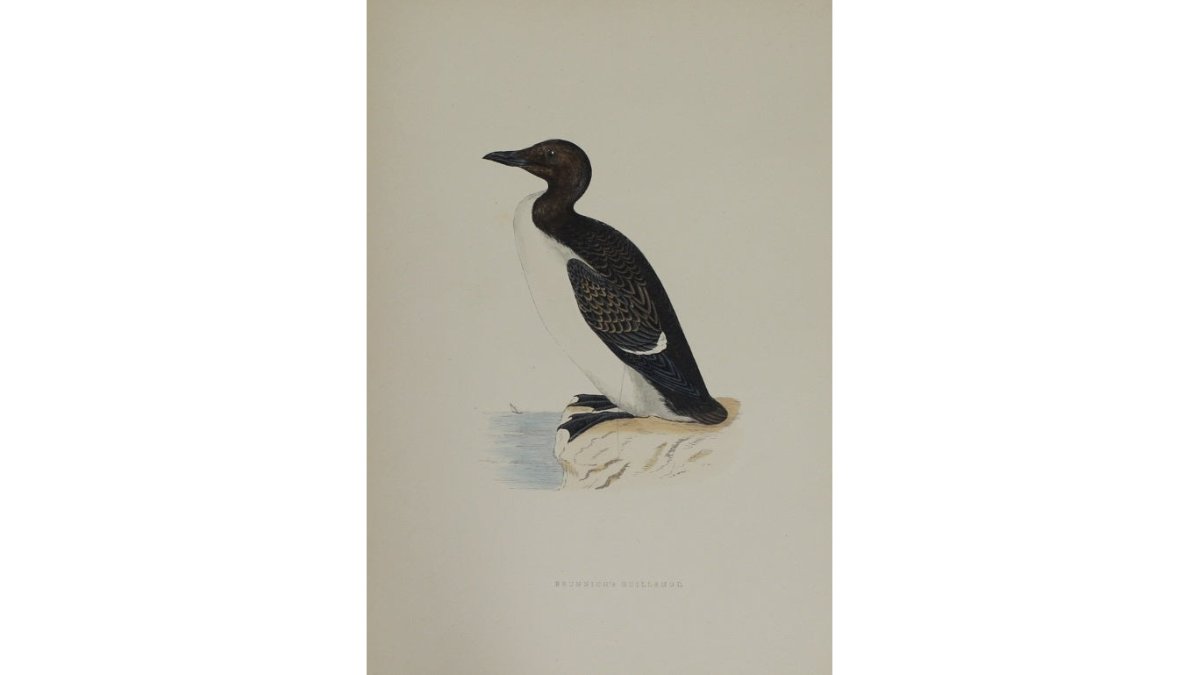
The Blackstart showcases Morris's skill with darker-plumaged species, where achieving depth in black and grey requires precision. Brunnich's Guillemot, an Arctic seabird rare in Britain, demonstrates the collection's geographic diversity and comprehensive approach to avian documentation.
The Bunting completes this trio with the same scientific precision applied to rarer subjects, characterising the entire Morris collection's democratic approach.
Courser, Equimaux Curlew, Garden Warbler, and Great Sedge Warbler Prints
The Courser, a ground-dwelling bird, required the engraver to suggest landscape context through sandy or stony terrain. The Equimaux Curlew demonstrates the historical evolution of bird naming.
Garden Warbler and Great Sedge Warbler showcase the collection's focus on British breeding birds. Hand-colouring distinguishes subtle plumage features: the buff wash on the Garden Warbler, the streaking on the Great Sedge Warbler. These details remain crisp in well-preserved originals.
Authenticity and Identification Guide for Vintage Bird Prints
Distinguishing authentic 19th century ornithological art from reproductions requires understanding printmaking techniques and paper characteristics.
Original hand-coloured wood engravings possess specific visual markers. Genuine Victorian-era prints used rag-based papers that age to warm cream or pale brown tones; modern reproductions use bright white paper. Original hand-colouring creates slight texture variation; reproductions feel uniformly smooth.
Wood engraving creates fine parallel lines forming tonal areas with distinctive visual texture impossible to replicate perfectly. Modern reproductions often show subtle inconsistencies in line weight revealing digital origin.
Paper watermarks provide definitive authentication. Hold prints to strong light for maker's marks. Morris collection prints typically show Victorian papermaker watermarks; reproductions use modern paper.
Condition assessment matters enormously for value. Very good condition (minimal foxing, no significant damage) commands premium pricing. Fair condition prints cost substantially less but retain historical authenticity.
Framing Antique Botanical Prints and Bird Illustrations
Proper framing protects vintage bird print collections from deterioration whilst displaying them beautifully. Framing decisions affect both visual impact and preservation.
Bird: Morris Rev Francis Orpen, Marsh Warbler, c1870 →
Archival-quality framing is non-negotiable for original 19th century prints. Use acid-free museum board, conservation-grade matting, and UV-filtering glass that blocks harmful light without distorting colour.
A substantial mat (approximately 50-75 millimetres) creates visual breathing room and protects edges. Bevelled mat cuts add sophistication. Cream, pale grey, or warm white complements hand-coloured bird prints better than stark white or dark tones.
Natural wood frames in oak, walnut, or cherry suit Victorian-era prints. Ensure frame depth accommodates the mat and print with space for air circulation; never seal prints tightly against glass.
Vintage bird print collections gain impact through grouping. Consistent frame styles and matting create cohesion; varying subjects and sizes add interest. Space frames approximately 50-75 millimetres apart for salon-style effect or wider for emphasis on individual pieces.
John Gould Bird Prints and Scientific Illustration Heritage
Gould's standards for anatomical accuracy and aesthetic presentation influenced ornithological art for generations, becoming the model Morris and other naturalists aspired toward.
Interior Design Styling with Vintage Bird Print Collections
Vintage bird print collections transform living spaces by introducing historical depth and natural world connection. Gallery walls or single-print displays both work beautifully depending on your aesthetic.
Group 6-12 prints of varying sizes in salon-style layout. Consistent framing creates cohesion. Arrange prints by species type or colour palette to create visual rhythm.
Single statement pieces work well in minimalist interiors. A large Morris print or John Gould lithograph commands attention above a console table, fireplace mantel, or headboard. Provide generous wall space to let the print breathe.
Hand-coloured bird prints feature warm earth tones (ochre, rust, soft greens, cream) that complement neutral walls. Pale grey, warm white, or soft beige allow prints to dominate. Darker walls require careful print selection.
Natural light brings out hand-colouring details but risks fading. Picture lights provide controlled illumination without UV damage. Avoid direct sunlight; filtered light through sheer curtains offers compromise.
Conservation and Preservation Best Practices
Maintain stable conditions between 18-21°C and 40-50% relative humidity. Avoid placing prints near heating vents, air conditioning units, or exterior walls where temperature swings are greatest.
UV radiation fades hand-coloured pigments and yellows paper. Frame prints with UV-filtering glass and avoid direct sunlight. Rotating prints seasonally distributes light exposure, extending each print's visual lifespan.
Always wear cotton gloves when handling unframed prints. Support by edges, never the surface. Never attempt cleaning; professional conservation is the only safe option for cleaning or repair.
Storage of unframed prints demands acid-free materials. Use archival tissue paper between prints, acid-free boxes, and cool, dry conditions.
Inspect your collection annually for signs of deterioration. Early detection of mould, insect damage, or structural weakness allows intervention before serious damage occurs.
Building a vintage bird print collection connects you to centuries of natural history observation and artistic achievement.
At Antiquarian Print Shop, our curated collection of over 1,200 authentic original and reproduction prints, including the celebrated Morris collection, provides access to genuine 19th century bird illustrations.
| Morris Collection Print | Size | Condition | Price | Best For |
|---|---|---|---|---|
| Marsh Warbler | 250 × 170mm | Very Good | $100.00 | Songbird enthusiasts |
| Barred Warbler | 250 × 170mm | Very Good | $100.00 | Warbler specialists |
| Bartrams Sandpiper | 250 × 170mm | Very Good | $100.00 | Shorebird collectors |
| Blackstart | 250 × 170mm | Very Good | $100.00 | Dark plumage studies |
| Brunnich's Guillemot | 250 × 170mm | Very Good | $100.00 | Seabird documentation |
| Bunting | 250 × 170mm | Very Good | $100.00 | Garden bird collectors |
| Courser | 250 × 170mm | Very Good | $100.00 | Ground-dwelling species |
| Equimaux Curlew | 250 × 170mm | Very Good | $100.00 | Historical nomenclature |
| Garden Warbler | 250 × 170mm | Very Good | $100.00 | Insectivore studies |
| Great Sedge Warbler | 250 × 170mm | Very Good | $100.00 | Habitat specialists |
Frequently Asked Questions
How do I identify authentic vintage bird prints from reproductions?
Authentic vintage bird prints typically show signs of age: hand-colouring variations, slight foxing or patina, and period-appropriate paper texture. Check the engraver's mark and artist signature. Original wood engravings and lithographs from the 19th century display distinct printing techniques. Reproductions often have uniform colour coverage and modern paper. Examine the print under magnification for hand-colouring brushstrokes, which indicate originality. The Morris collection, for example, features beautifully executed hand-coloured wood engravings from A History of British Birds, with each print showing the individual artistry of period colourists.
What is the difference between original antique bird prints and high-quality reproductions?
Original antique bird prints are unique or limited-edition works created using traditional printmaking methods like wood engraving, lithography, or etching. Each original possesses individual character, age patina, and historical provenance. High-quality reproductions faithfully recreate the aesthetic using modern printing technology, offering affordability and consistency. Reproductions lack the tactile qualities of originals but provide access to iconic ornithological art. Both serve different purposes: originals appeal to collectors and investors, while reproductions suit those seeking authentic aesthetic at lower cost for interior design.
How should I preserve and care for vintage bird prints in my home?
Display vintage bird prints away from direct sunlight, which causes fading over time. Use archival-quality framing materials, including acid-free mats and UV-protective glass, to prevent deterioration. Maintain stable humidity and temperature; fluctuations can warp paper and damage hand-colouring. Avoid damp areas like bathrooms. Handle prints with clean, dry hands, preferably wearing cotton gloves. Store unframed prints flat in acid-free boxes. Regular gentle dusting with a soft brush preserves surface detail. Consider professional conservation for valuable pieces showing signs of damage, yellowing, or foxing.
What makes the Morris ornithological collection significant for collectors?
The Morris collection represents a milestone in ornithological illustration. Reverend Francis Orpen Morris's A History of British Birds, printed by Benjamin Fawcett from 1850 onwards, contained 358 hand-coloured plates created through wood engraving. Each print was hand-coloured by a team of colourists under strict supervision, making every plate unique. The collection documents British bird species with scientific precision and aesthetic beauty, blending natural history with fine art. Original prints from this series, such as the Marsh Warbler and Barred Warbler at $100 each, remain accessible to collectors seeking authentic 19th-century ornithological art with genuine heritage value.
Can I find vintage bird prints in custom sizes for my specific wall space?
Yes, custom sizing is available. Antiquarian Print Shop offers custom print options in multiple sizing formats to suit different interior layouts and complement your décor. Original prints typically come in their historical dimensions, but high-quality reproductions can be produced to your specifications. When ordering custom sizes, ensure the framing service uses archival materials to protect your investment. Discuss sizing early in the selection process to avoid disappointment and ensure the aesthetic integrity of the original composition is maintained.