
Antique Botanical Prints for Home Decor
Table of Contents
- What Makes Antique Botanical Prints Special for Home Decor
- How to Identify Genuine Antique Prints Versus Reproductions
- Building a Botanical Prints Gallery Wall
- How to Frame Antique Prints for Maximum Impact
- Styling Vintage Botanical Wall Art by Room
- Curated Selection of Antique Botanical Prints
- Caring for and Preserving Your Botanical Print Collection
- Conclusion
- Frequently Asked Questions
Last Updated: October 9, 2026
What Makes Antique Botanical Prints Special for Home Decor
Antique botanical prints have captivated designers and collectors for centuries by combining scientific precision with genuine artistic beauty. Rendered through copperplate engraving and hand colouration, they feel timeless and personal.
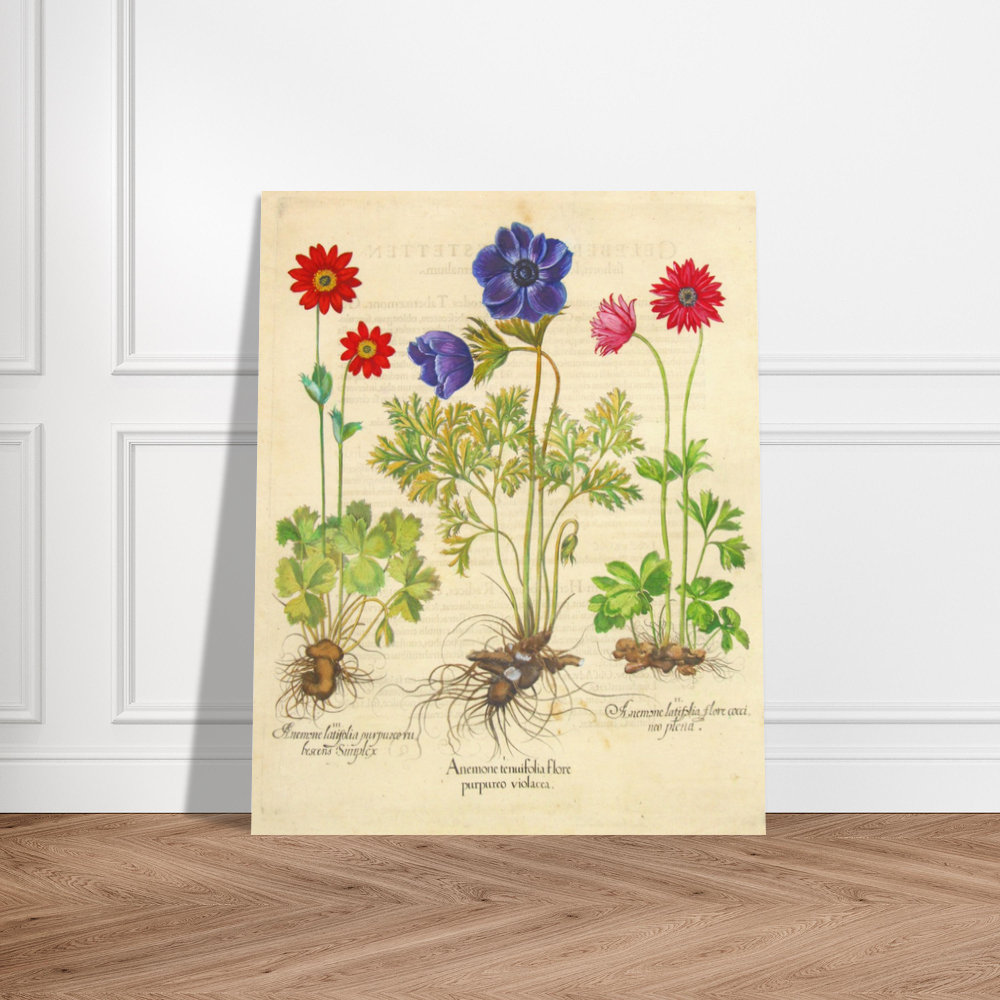
What separates antique botanical prints from generic floral decor is historical authenticity. Each print tells a story: the botanist who documented the specimen, the artist who translated it to copper, the colourist who hand-tinted each plate. A Besler rose print from 1613 represents 400 years of heritage on your wall.
Beyond aesthetics, these prints hold investment potential. Rare 17th- and 18th-century originals appreciate over time, especially in excellent condition with documented provenance. Even hand-coloured reproductions hold value better than contemporary posters.

The versatility is remarkable. Whether your home is rustic farmhouse, contemporary minimalist, or eclectic maximalist, botanical prints integrate seamlessly. They soften hard edges, add warmth to cool palettes, and create visual interest without demanding attention.
How to Identify Genuine Antique Prints Versus Reproductions
The most common mistake collectors make is assuming all old-looking prints are authentic antiques. Many skilled reproductions exist, some deliberately aged. Learning to spot the difference protects your investment.
Genuine antique prints exhibit characteristics reproductions rarely replicate convincingly. Examine the paper first.
Look at the printing technique. Authentic copperplate engravings show subtle ink variations where the engraver's hand varied pressure, with fine lines following the subject's contours. Under magnification, the ink sits slightly raised.
Hand colouration is where reproductions most often fail. Original hand-coloured prints show slight variations in pigment application: colours are occasionally uneven, sometimes overlap slightly, and vary in intensity. This imperfection marks authenticity.
Check the signature and provenance documentation. Authenticated antique prints come with artist name, engraver, publication date, edition information, and ideally a chain of ownership.
Price is an honest indicator. Originals from celebrated collections like the Hortus Eystettensis command premium prices because authenticated examples are scarce. A reproduction of the same image might cost $450, while an original runs $6,000.
Building a Botanical Prints Gallery Wall
Start by choosing your wall. The best gallery walls live where people naturally pause: above a console table in an entryway, flanking a bed, or above a sofa.
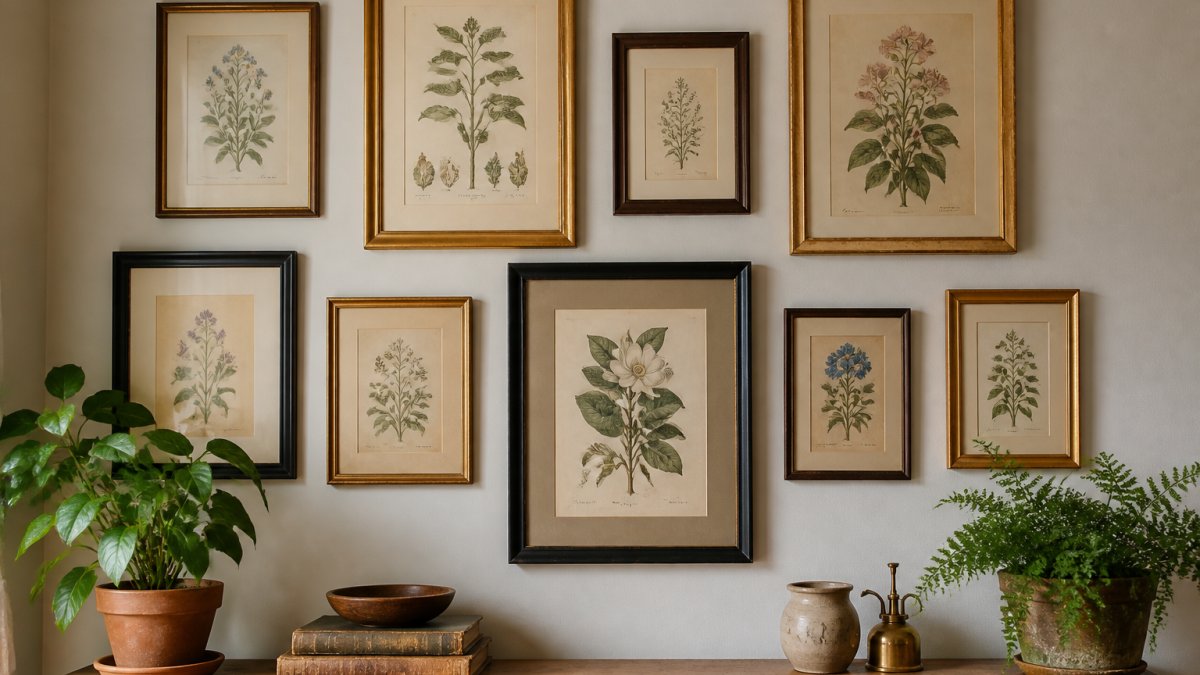
Plan your layout on paper first. Sketch your wall dimensions and arrange print outlines to scale. Balance visual weight: don't cluster all large prints on one side.
Consider your frame choices carefully.
Spacing creates rhythm. Maintain roughly 5-8 centimetres between frames for cohesion, or go tighter (2-3 centimetres) for a dramatic salon-style effect. Wider spacing (15+ centimetres) suits minimalist rooms.
Test your arrangement with paper cutouts taped to the wall before hanging anything. Once satisfied, mark nail positions lightly with pencil, then hang systematically from top to bottom, left to right.
How to Frame Antique Prints for Maximum Impact
Framing is where a beautiful antique botanical print becomes finished wall art. The frame serves three purposes: protection, presentation, and integration with your interior.
Sizing and Spacing Considerations
Antique botanical prints typically come in standard sizes: 120 × 200 millimetres for smaller 18th-century engravings, up to 545 × 435 millimetres for large Besler folios. Match frame size to wall space and viewing distance.
Spacing affects how the print reads in a frame. Most professional framers recommend 25-50 millimetres of mat space around the print, preventing it from feeling cramped. Smaller prints need 25 millimetres; larger prints benefit from 50.
Choose mat colours that complement your print and walls. Off-white and cream mats work universally and let the botanical subject shine. Soft grey suits contemporary spaces. Avoid bright white mats, which create harsh contrast with aged paper.
Glass versus acrylic matters for preservation. Museum-quality UV-protective glass prevents fading and reflects less light, but costs more and weighs significantly, important for large pieces on plaster walls.
Styling Vintage Botanical Wall Art by Room
Botanical prints adapt to any room's function and atmosphere. Choose subjects and frame styles that match the space's purpose and existing decor.
Living Rooms and Bedrooms
Living rooms benefit from larger botanical prints or gallery walls because these spaces invite lingering. A 400 × 500 millimetre framed print above a console table or sofa anchors the room's colour palette.
Bedrooms work beautifully with smaller, more intimate prints. A pair of 250 × 350 millimetre framed botanicals flanking the bed creates symmetry and calm. Soft-coloured prints, pale greens, dusty roses, muted yellows, suit bedrooms better than vibrant jewel tones.
Consider the light in each room. Hand-coloured botanical prints show their colours best in natural or warm artificial light. North-facing walls receive cool, indirect light that mutes warm-toned prints; south-facing walls bring out their vibrancy. Position prints where they'll be backlit by natural light when possible.
Botanicals, Besler Basilus, Cyclamen Roma, Spica Vulgaris Flore Albo →
Bathrooms and Home Offices
Bathrooms present a preservation challenge: humidity damages paper and can cause mold growth. Frame originals behind conservation glass, or choose reproductions instead. Quality reproductions' moisture resistance makes them practical here without sacrificing aesthetics.
Home offices benefit from botanical prints because they soften the professional atmosphere without distraction. A single large print or a trio above a desk creates visual interest during focus breaks. Choose cooler-toned botanicals (blues, deep greens) for focus-intensive work, or warmer tones (terracotta, golden yellows) if the room feels sterile.
Curated Selection of Antique Botanical Prints
The Hortus Eystettensis Collection: Besler's 17th-Century Masterpieces
The Hortus Eystettensis stands as the oldest and most celebrated botanical folio in history. Created between 1613 and 1640, it documents the garden of Johann Konrad von Gemmingen, Prince-Bishop of Eichstätt. Basilius Besler, a Nuremberg apothecary and botanist, spent 16 years recording the garden's plants through the four seasons.
What makes these prints extraordinary is their dual nature: scientifically accurate botanical records and genuine works of art. Plants are depicted near life-size with Latin nomenclature labelled, yet the compositions balance precision with beauty, and the hand colouration brings remarkable vibrancy to 400-year-old paper.
Our collection includes several Besler specimens: the Cyclamen Roma, Hyacinthus Orientalis Major, Iris Bulbosa, and Lillium Fatum, each priced at $6,000 as authentic originals. For collectors seeking the Hortus Eystettensis aesthetic at more accessible price points, we offer hand-coloured reproductions like the Botanicals, Besler Basilus, Roses, c1613, Hand Coloured Reproduction at $450.
18th-Century Botanical Studies: Curtis and Andrews
The 18th century brought a shift in botanical illustration toward greater accuracy and artistic refinement. William Curtis, founder of the Botanical Magazine, pioneered this transition. His Botanical, Curtis William, BM, Golden Amaryllis, 1791 exemplifies his approach: meticulous scientific rendering combined with decorative composition. Priced at $300, this original copperplate engraving with later hand colouring shows the quality Curtis demanded.

Henry Andrews followed Curtis's model but brought greater artistic flair. His Botanical, Andrews Henry, Erica Oblique, Copperplate Engraving, 1797 at $180 shows why his work remained popular: botanical accuracy meets artistic elegance on thick 18th-century paper.
These prints suit contemporary interiors particularly well because their refined, less ornate style complements minimalist and mid-century modern aesthetics. Smaller than Besler folios, they work beautifully as sets of three or five in modest-sized rooms.
Hand-Coloured Reproductions: Affordable Authenticity
Not every collector has $6,000 for an original Besler, and that's where reproductions serve a genuine purpose. Hand-coloured reproductions combine historical authenticity with accessibility. They're printed from original plates or high-quality scans, then coloured by hand using traditional methods.
The Botanicals, Besler Basilus, Roses, c1613, Hand Coloured Reproduction at $450 delivers the visual impact of an original Besler at a fraction of the cost. Modern colourists apply pigments with the same care as their historical counterparts, creating subtle variations that prevent the print from feeling mass-produced.
We also offer the Botanical, Weinmann, Johann Wilhelm: Ehinomelo Cactos, Phytanthoza Iconographia, c1737 at $300. Weinmann's work represents one of the earliest uses of colour printing from a single copperplate, a technical achievement that influenced botanical illustration for generations.

Caring for and Preserving Your Botanical Print Collection
Once you've acquired your antique botanical prints, proper care ensures they remain vibrant for decades or centuries. Paper is fragile, but the right conditions protect it remarkably well.
Light is the primary threat to prints. Ultraviolet radiation fades pigments and weakens paper fibres. Frame prints behind UV-protective glass, which filters 99% of harmful rays.
Humidity and temperature fluctuations cause paper to expand and contract, leading to warping and cracking. Maintain consistent conditions: 45-55% relative humidity and 18-21°C.
Handle prints with clean, dry hands, since skin oils can stain paper permanently.
Avoid amateur restoration. If your print shows foxing, staining, or damage, consult a professional conservator, since DIY cleaning methods often cause irreversible harm.
For valuable originals, document condition with photographs and keep records of provenance, purchase price, and any conservation work.
Conclusion
Antique botanical prints transform walls into galleries of natural history and artistic achievement. Whether you choose rare 17th-century Besler originals or hand-coloured reproductions, these prints connect your home to centuries of botanical tradition and scientific curiosity. They work across interior styles, improve with age, and hold their value, making them both beautiful and practical investments.
At Antiquarian Print Shop, we've spent years sourcing authentic pieces and creating hand-coloured reproductions that honour the traditions they represent. Our curated collection of over 1,200 prints gives you access to botanical art that would otherwise remain in museums or private collections. Shop our original prints and reproductions to find the pieces that speak to your space and aesthetic.
Frequently Asked Questions
How can you tell if a botanical print is an original antique versus a reproduction?
Original antique botanical prints typically show signs of age: foxing (brown spots), slight yellowing of paper, and hand-colouring variations where pigments were applied individually. Examine the paper texture, old prints use thicker, softer paper than modern reproductions. Check the technique: originals from the 17th and 18th centuries were created using copperplate engraving or lithography, visible under magnification as fine parallel lines. Reproductions often have uniform, flat colour application. Request provenance documentation and condition reports from reputable dealers like Antiquarian Print Shop to verify authenticity.
What is the typical value of antique botanical prints, and do they appreciate over time?
Antique botanical prints vary widely in value. Original hand-coloured copperplate engravings from significant collections like Besler's Hortus Eystettensis (1613) command premium prices, often $6,000 or more, due to rarity, condition, and historical significance. 18th-century prints from Curtis or Andrews typically range from $180-$300. Authenticated originals do appreciate, particularly those from renowned botanical artists or limited first editions. High-quality reproductions remain affordable entry points at $300-$500, offering the aesthetic appeal without the investment risk. Condition, provenance, and artist reputation are key factors in long-term value.
What colours and interior styles work best with antique botanical wall art?
Antique botanical prints complement neutral walls (cream, soft grey, pale green) that let the detailed illustrations stand out. They work beautifully in traditional, vintage-inspired, and eclectic interiors. Pair earth-toned frames with botanical prints in living rooms or bedrooms for a cohesive, calming effect. In modern spaces, botanical prints add warmth and organic texture, contrast them with clean lines and minimal furnishings. Colours within the prints (greens, ochres, soft reds) coordinate naturally with natural wood furniture, linen upholstery, and botanical accessories like dried flowers or potted plants. Avoid bold, saturated wall colours that compete with the delicate illustration details.
How do you protect antique botanical prints from fading and damage?
Frame prints using UV-protective glass or acrylic to block harmful light rays that fade pigments over time. Avoid direct sunlight exposure, position prints on interior walls away from south-facing windows. Use acid-free matting and backing to prevent deterioration and foxing. Maintain stable humidity (40-50%) and moderate temperature to prevent paper warping and mould growth. If storing unframed prints, wrap them in acid-free tissue and store flat in a cool, dry location. For valuable originals, consider professional conservation framing. Regular gentle dusting of frames (never the print surface) helps maintain condition. Antiquarian Print Shop can advise on proper framing and preservation techniques for your collection.