
How to Protect Antique Paper Prints From Fading
Last Updated: November 21, 2026
Quick Summary
To protect antique paper prints from fading, keep them out of direct sunlight and strong light, use UV-filtering glazing, and frame them with acid-free materials. Store unframed prints flat in archival folders, and keep humidity and temperature stable.
- Light is the biggest threat, since ultraviolet radiation breaks down printed colours.
- Keep prints on interior walls and away from windows that get afternoon sun.
- Use UV-filtering glazing with a spacer so the glass never touches the print.
- Frame with acid-free mat board, backing and cotton or Japanese paper hinges.
- Store unframed prints flat in acid-free folders and never roll or fold them.
Table of Contents
- Why Antique Paper Prints Fade and What Causes the Damage
- Step 1: Control Light Exposure and Choose the Best Lighting for Artwork on Paper
- Step 2: Use Archival Framing for Antique Prints
- Step 3: Maintain Stable Humidity and Temperature for Paper Preservation
- Step 4: How to Store Antique Prints When Not on Display
- Monitoring Your Collection and What to Do After Fading or Water Damage
- Setting Up Your Prevention Plan for Your Prints
- Frequently Asked Questions
Why Antique Paper Prints Fade and What Causes the Damage
Protecting antique paper prints from fading starts with understanding what is actually doing the damage.
Light is the biggest threat. Ultraviolet radiation breaks down the chemical bonds in printed colours, so faded blues and pinks are often the first sign of trouble.
A print can fade slowly for years before anyone notices. By the time the damage is visible, it may be permanent.
- Direct sunlight and strong indoor light fade colours
- Heat speeds up paper ageing and brittleness
- Humidity encourages mould, stains and foxing
Step 1: Control Light Exposure and Choose the Best Lighting for Artwork on Paper
Limiting light is the single most effective step you can take, but 'keep it out of the sun' is only the start.
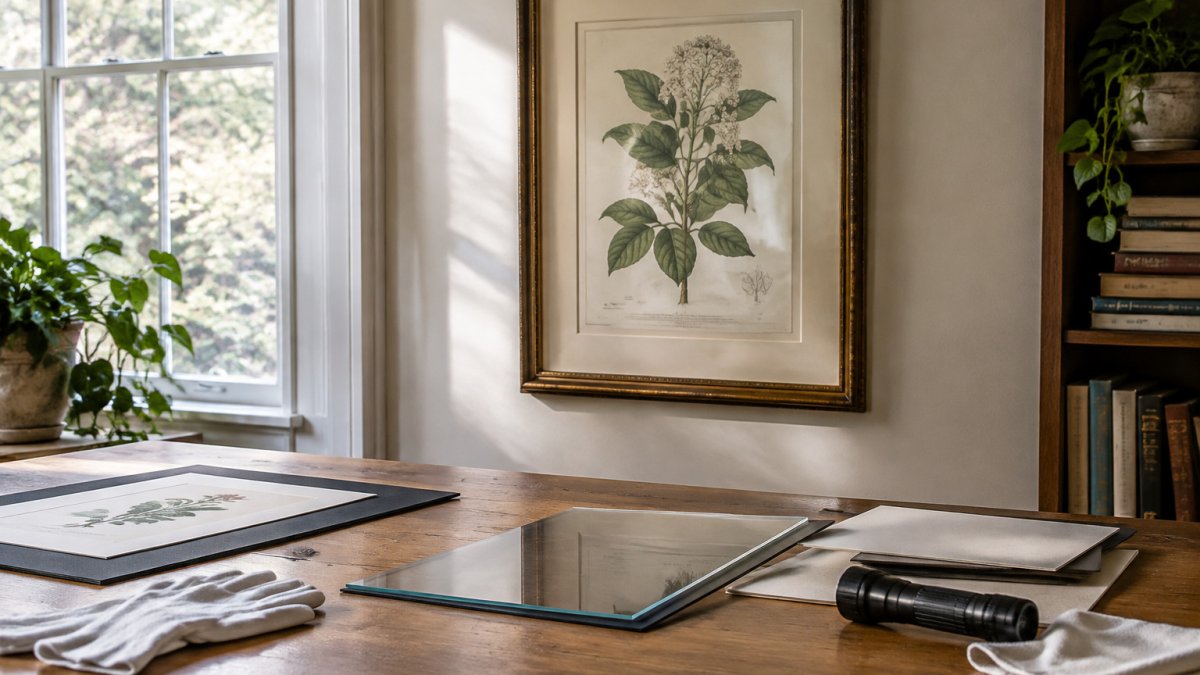
How Light Intensity, Duration and Window Orientation Affect Fading
Light damage is cumulative.
Window orientation changes the dose dramatically. In the southern hemisphere, north- and west-facing windows receive the most intense direct sun, especially in the afternoon and through summer.
A few practical rules follow from this:
- Treat any position that receives direct sun for part of the day as unsuitable for a valuable print.
- Reflected light off a bright wall or glossy surface still counts toward the dose.
- Rotating a print to a darker wall every few months reduces cumulative exposure, but it does not reverse fading that has already occurred.
This is practical guidance, not a conservation standard. Conservation bodies publish recommended light levels for sensitive paper, and a paper conservator can advise on a specific print.
Using UV-Filtering Glazing and Protective Barriers
UV-filtering glass or acrylic blocks much of the ultraviolet light that drives fading. Ask for glazing that filters as much UV light as possible.
Standard picture glass offers little protection against UV, so it is not a substitute for proper glazing. Nor does UV glazing make a sunny wall safe: it reduces the ultraviolet component but does not stop visible light from doing damage over time.
Limiting Direct Sunlight and Bright Light
Hang prints on interior walls rather than beside windows that get afternoon sun. If a print must sit near a window, use sheer blinds or curtains during the brightest hours.
Watch out: a print left in a sunny spot for a few seasons can lose noticeable colour, even if it looks fine at first glance.
Matching the Approach to the Print
Not every print responds to light in the same way. Early hand-coloured prints, lithographs and engravings can behave very differently from later colour-printed pieces, because the pigments, inks and paper were made with different materials. Some colours, certain blues, pinks and yellows in particular, are known to be especially light-sensitive, while others hold up better.
The article breaks light exposure down into a few practical controls, each with a different level of protection.
| Measure | What it does | Limitation |
|---|---|---|
| Keep out of direct sun | Cuts the strongest light dose | Reflected light still counts |
| UV-filtering glazing | Blocks much ultraviolet light | Does not stop visible light damage |
| Sheer blinds or shutters | Reduces intensity at peak hours | Useful only near windows |
| Rotating displays | Lowers cumulative exposure | Does not reverse existing fading |
| Hanging on interior walls | Avoids afternoon sun | Less risk, not zero risk |
Step 2: Use Archival Framing for Antique Prints
Framing protects a print physically and chemically. Archival materials are made without acids and lignin, which otherwise migrate into the paper and cause yellowing over time.
Choosing Acid-Free Mat Board, Backing and Hinges
Look for mat board, backing board and hinges labelled acid-free and lignin-free. Use cotton or Japanese paper hinges rather than tape, and avoid pressure-sensitive adhesives entirely. Acid-free backing keeps the print stable and makes it easier to remove for inspection later.
- Acid-free mat board with a window cut to show the image
- Acid-free backing board sealed at the back of the frame
- Cotton or Japanese paper hinges attached only at the top edge
- No glue, tape or rubber cement touching the artwork
DIY Framing or a Professional Conservator: How to Decide
Simple framing with archival materials is manageable at home for sturdy prints in good condition. Choose a professional conservator if the print is rare, valuable, torn, water-damaged or already showing foxing. Conservators can also assess whether the paper or ink needs treatment before framing.
A useful rule: if a mistake would cost you more than the framing, pay for expert help.
Step 3: Maintain Stable Humidity and Temperature for Paper Preservation
Paper responds to its environment. Stable conditions matter more than hitting a perfect number. Aim for a steady temperature and relative humidity, avoiding large swings from day to night or season to season.
Keep prints away from radiators, heaters, fireplaces and kitchens. Avoid bathrooms and damp basements, where mould can take hold quickly.
- Use a hygrometer to track humidity in the room
- Run a dehumidifier in damp areas rather than letting moisture build
- Keep prints off exterior walls that get cold and condensate
Step 4: How to Store Antique Prints When Not on Display
Storage is where many prints are damaged without anyone noticing. Unframed prints need protection from light, dust and handling.
Storing Unframed Prints Flat with Archival Folders and Tissue
Store unframed prints flat in archival folders or boxes made from acid-free board. Place acid-free tissue between each sheet to stop them rubbing or sticking. Keep the stack in a plan cabinet or shelf where it stays level and dry.
Don't roll prints or fold them to fit a space. Creases and rolled edges can crack the paper permanently.
Handling Prints Safely and What Not to Do
Clean, dry hands or cotton gloves reduce the oils and dirt that transfer onto paper. Support the print with both hands, and never handle it by a corner or fragile edge.
Don't use household cleaners, tape or sticky notes on a print. Don't try to flatten a curled print by heating it. Don't store prints in plastic bags, which trap moisture.
Monitoring Your Collection and What to Do After Fading or Water Damage
This section covers how to inspect, what never to do, and when to call in a conservator.
A Simple Inspection Routine
Check your prints every few months, and always before and after moving or reframing them. Work in good, diffuse light and look at each print systematically:
- Colour: compare edges that have been hidden under a mount with the exposed image. A visible difference usually means light fading.
- Paper tone: yellowing, browning or grey patches can signal acid migration, foxing or moisture.
- Surface: look for spots, tide marks, flaking ink or a musty smell, which point to damp or mould.
- Framing: check for condensation behind the glass, loose hinges, rusting staples or backing that has warped.
Record what you see, with a date and a photo. A written record makes it far easier to tell whether a change is new or has been there for years.
Safe Cleaning and What Not to Do
Dust gently with a soft, dry brush or a microfibre cloth, working away from the print surface rather than pressing on it. That is the limit of what most owners should attempt.
Do not use household cleaners, sprays, wipes, erasers, tape, sticky notes or adhesives on or near a print. Do not attempt to wash, bleach, iron or flatten a print with heat, and do not apply home remedies to stains or mould.
If a Print Gets Wet
Act quickly but gently. Separate wet prints from dry ones, lay each flat on blotting paper or clean absorbent paper, and change the blotting paper as it becomes damp. Keep the print out of direct heat and sunlight while it dries, and do not stack wet prints on top of each other. If the paper is coated, fragile or already damaged, or if the wetting involved dirty water, stop and contact a conservator, mould can develop quickly in warm conditions, and poor drying can set stains.
If You Notice Fading, Foxing or Mould
Stop handling the print, keep it dry and shaded, and have it assessed. Fading itself cannot be reversed, but a conservator can advise on stabilising the piece, reducing further exposure and deciding whether treatment is worthwhile. For mould, isolate the affected print from the rest of the collection and seek advice before cleaning anything yourself.
When to Call a Conservator
A paper conservator is the right call when a print is rare, valuable, torn, water-damaged, mouldy or already showing foxing or fading; when the inks or pigments are fragile or hand-applied; or when you are unsure how the print will respond to framing or display. For sturdy, low-value prints in good condition, archival framing and sensible placement are usually enough.
Setting Up Your Prevention Plan for Your Prints
A good prevention plan takes little time but protects a collection for decades. Start by listing every print, where it sits and what light and humidity it gets.
- Move prints out of direct sun and away from heat sources
- Replace non-archival mounts and backing with acid-free materials
- Set a reminder to check humidity and inspect prints twice a year
- Store spare prints flat in archival folders
For prints you want to display in an unusual setting, such as an office wall, read Are Antique Maps a Smart Choice for Office Walls? to weigh the options. Once you're ready to store prints safely, see How to Handle Antique Prints With Cotton Gloves for careful handling techniques. If you're looking for a thoughtful present for a print lover, the Antiquarian Print Shop Gift Card is a simple option.

For authoritative guidance on paper conservation, see Canadian Conservation Institute guidance on paper and light exposure.
Protecting a print for the long term is easier when you start with the right materials and a clear plan.
Frequently Asked Questions
How do you stop antique prints from fading?
The most effective approach combines four measures: limit light exposure, especially direct sunlight, use UV-filtering glazing, frame with acid-free materials, and keep the room at a stable temperature and humidity. Hang prints away from windows and heat sources, and rotate display pieces with stored ones where practical. Each measure reduces a different cause of damage, so the combination protects far more than any single step on its own.
Does sunlight damage antique paper prints?
Yes. Sunlight carries ultraviolet radiation that breaks down the pigments and inks in antique prints, causing colours to lighten and paper to yellow over time. Damage is cumulative and generally cannot be reversed, so even indirect daylight should be limited. Keep prints out of direct sun and bright light, and use UV-filtering glazing when a print must hang near a window.
How should antique paper prints be stored when not on display?
Store unframed prints flat in archival folders or boxes made from acid-free board, with sheets of acid-free tissue between them to prevent abrasion and transfer. Keep the storage in a cool, dry, dark place away from exterior walls and damp areas such as basements. Avoid stacking heavy items on top, and do not store prints in plastic bags, which trap moisture.
Can a faded antique print be restored?
Some fading can be reduced by a professional paper conservator, but the original colour cannot always be fully recovered, and home treatments often cause further harm. Do not attempt bleaching, cleaning with household products or taping damaged areas. If a print has faded or been water damaged, stop further exposure, keep it flat in a stable environment, and consult a qualified conservator before deciding on any treatment.