
Rare 18th Century Etching Prints: A Collector's Guide
Table of Contents
- What Makes Rare 18th Century Etching Prints Valuable
- Techniques: Etching vs. Engraving and Other Printmaking Methods
- Identifying Original Antique Prints from Reproductions
- Valuing 18th Century Engravings: What Collectors Need to Know
- Featured Rare Prints: Henry Andrews Botanical Series and Gualtieri Shell Engravings
- Antique Print Preservation Tips for Long-Term Ownership
- Investment Potential and Condition Assessment
- Frequently Asked Questions
Last Updated: September 23, 2026
What Makes Rare 18th Century Etching Prints Valuable
Rare 18th century etching prints command significant prices due to artistic merit, historical significance, and scarcity. Three factors separate valuable pieces from forgeries: technique authenticity, provenance, and condition.
The intaglio process incises an image into copper or steel plate, creating prints with distinctive characteristics reproductions cannot replicate. Each impression carries the plate mark, a subtle depression where the copper edge pressed into dampened paper, nearly impossible to fake.
Botanical engravings, shell studies, and neoclassical compositions were expensive luxury items in the 1700s. Many original plates were melted down and countless impressions deteriorated, making surviving examples genuinely rare.
Condition assessment separates investment-grade pieces from wall art. Foxing, laid paper texture, hand-colouration quality, and catalogue raisonné references influence value. Original prints in very good condition with documented provenance typically appreciate over time.
Techniques: Etching vs. Engraving and Other Printmaking Methods
Etching and engraving are both intaglio techniques where the image sits below the paper surface, but execution differs fundamentally.
Engraving uses a burin to cut directly into copper plate, creating precise, uniform lines. Engraved plates withstand thousands of impressions, making them economical for publishers. Most 18th century botanical series employed copperplate engraving for durability and clarity.
Etching covers copper plate with acid-resistant ground, then scratches away coating with an etching needle. Acid bites into exposed lines, allowing spontaneous mark-making with varied line weights. Etched plates wear faster, so fewer impressions survive.
A state refers to a particular stage of a plate's life. First states are the earliest version; collectors prize them because they represent the artist's original vision and are typically rarer.
The Gualtieri shell engravings combined copperplate engraving with hand-colouration, where skilled artisans applied watercolours to finished impressions, a labour-intensive process explaining their premium pricing.
Identifying Original Antique Prints from Reproductions
Distinguishing authentic 18th century etching prints from modern reproductions requires systematic examination of paper, ink, and the plate mark.
Genuine 18th century prints use laid paper (showing parallel lines under light) or wove paper. Original paper exhibits foxing distributed naturally; uniform patterns or absence should raise suspicion.
The plate mark is the physical depression where the copper plate's edge pressed into dampened paper. Authentic intaglio pieces show a subtle raised edge on the back. Examining with a magnifying glass reveals a three-dimensional appearance that cannot be faked convincingly.
Original 18th century prints used oil-based inks that oxidised over centuries, developing subtle sheen. Ink sits raised on paper surface; modern reproductions deposit ink uniformly and flatly.
Original hand-colouring shows slight variations between impressions and uneven fading. Perfect, uniform colour suggests modern reproduction.
Checking the verso (back) reveals important clues. Original prints show text, publisher marks, or collection stamps.
Prints with documented ownership history, catalogue raisonné references, or museum exhibition records strengthen authentication and command higher confidence.
Botanical, Andrews Henry, Erica →
Valuing 18th Century Engravings: What Collectors Need to Know
Valuation of rare 18th century etching prints depends on multiple factors that work together to determine market price.
Prints by celebrated masters command premiums. Henry Andrews's Botanist's Repository engravings are highly sought for botanical accuracy. Gualtieri's shell studies influenced Linnaeus, establishing historical significance supporting premium pricing.
First-state impressions are rarer and more valuable than later states or restrike editions. Identifying states requires catalogue raisonné references.
Original prints in very good condition command 2-3 times the price of fair condition examples. Hand-colouration quality matters enormously; fading or amateur repainting reduces value.
Larger prints required more copper and labour, making them rarer. Folio-sized engravings command premium pricing.
Botanical and natural history prints have experienced sustained collector interest, supporting stable valuations and documented appreciation over 10-20 years.
| Valuation Factor | High Value Indicator | Lower Value Indicator |
|---|---|---|
| Artist | Established reputation, documented works | Obscure or anonymous artist |
| State | First state, period impression | Later state, restrike edition |
| Condition | Very good, minimal foxing, intact margins | Fair, significant foxing, tears present |
| Rarity | Fewer than 50 known impressions | Hundreds of impressions recorded |
| Provenance | Documented ownership, museum records | Unknown history, no documentation |
| Size | Folio or large format | Small octavo format |
Featured Rare Prints: Henry Andrews Botanical Series and Gualtieri Shell Engravings
The two most significant collections available through Antiquarian Print Shop represent the pinnacle of 18th century natural history illustration: Henry Andrews' botanical copperplate engravings from The Botanist's Repository and Niccolo Gualtieri's extraordinary shell studies.
Henry Andrews Botanical Copperplate Engravings (1797)
Henry Charles Andrews revolutionised botanical illustration by combining scientific accuracy with artistic appeal. His Botanist's Repository (1797-1812) provided affordable botanical images to Britain's growing population of amateur gardeners.
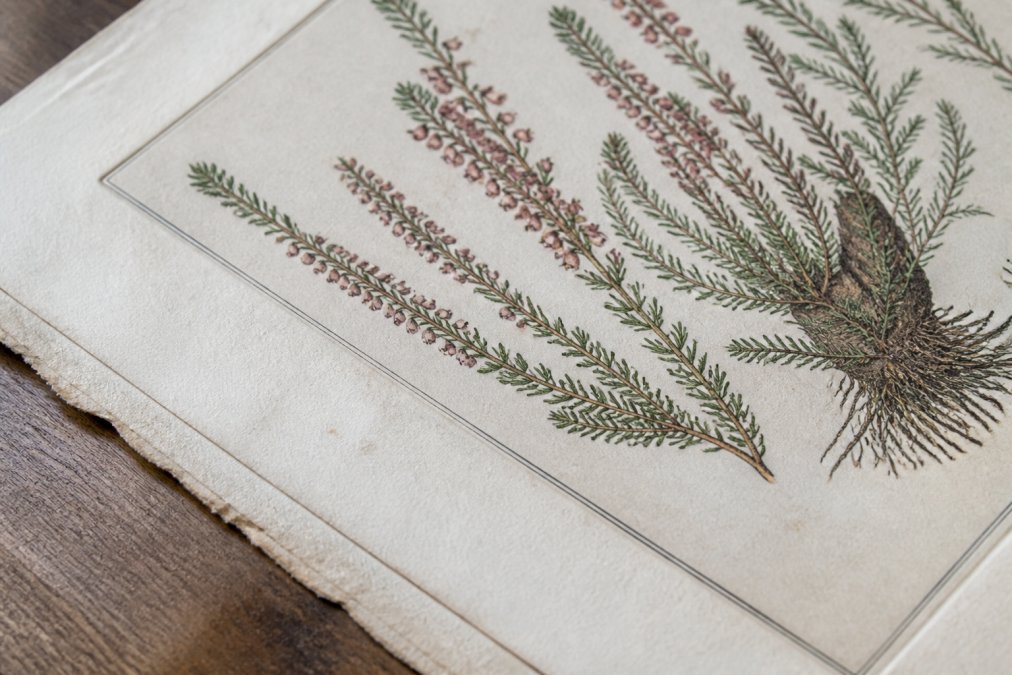
Andrews worked as artist, engraver, colourist, and publisher simultaneously. His images demonstrate exceptional botanical knowledge combined with aesthetic sensibility.
- Erica Lubiflora, Very good condition, 260 x 415mm, AUD $220
- Erica Oblique, Very good condition, 260 x 415mm, AUD $180
- Erica Flagelliformis, Very good condition, 260 x 415mm, AUD $180
- Erica Quadriflora, Very good condition, 260 x 415mm, AUD $250
Niccolo Gualtieri Shell Engravings (1742)
Niccolo Gualtieri's Index testarum conchyliorum quae adservantur in museo Nicolai Gualtieri (Florence, 1742) documented his personal shell collection with copperplate engravings by Antonio Pazzi and Giuseppe Menabuoni.


- Gualtieri Shell Engraving, Very good condition, 320 x 450mm paper, AUD $1,250
- Gualtieri Shell Engraving #29, Very good condition, 320 x 450mm paper, AUD $1,250
- Gualtieri Shell Engraving Plate T 66, Very good condition, 320 x 450mm paper, AUD $1,250
Antique Print Preservation Tips for Long-Term Ownership
Preserving rare 18th century etching prints requires understanding how paper, ink, and environmental factors interact over time. Proper care prevents deterioration and maintains investment value.
Investment Potential and Condition Assessment
Rare 18th century etching prints have demonstrated consistent appreciation over decades, making them attractive to collectors viewing purchases as long-term financial assets. Understanding condition grading and investment characteristics helps evaluate potential acquisitions.
Frequently Asked Questions
How can you tell if an 18th century etching or engraving is original?
Authentic 18th century etching prints display several identifying features. Look for a plate mark, the indentation left by the copper plate edges, which is visible on original prints but absent on later reproductions. Examine the paper closely for a watermark and laid paper texture characteristic of period stock. Hand-coloured originals show uneven pigmentation and slight variations that differ from modern printing. The verso (back) often contains publisher marks, catalogue notes, or foxing (age spots). Original intaglio prints, etchings and engravings, have a slight embossing from the pressure of the printing press, which you can feel by running your finger gently across the surface.
What is the difference between an etching and an engraving in 18th century prints?
Both etching and engraving are intaglio techniques, meaning the image is incised below the surface of a metal plate. In etching, an artist uses an etching needle to scratch through a wax coating on the plate, then submerges it in acid to bite the lines into the metal. Engraving uses a burin, a sharp tool, to cut directly into the plate by hand, creating finer, more controlled lines. Engravings typically show greater precision and tighter cross-hatching patterns, while etchings often appear more spontaneous and painterly. Many 18th century prints combined both techniques for richer tonal effects.
Are rare 18th century etching prints a good investment?
Rare 18th century etching prints can hold and appreciate in value, particularly those with strong provenance, historical significance, and excellent condition. Botanical and natural history prints, such as those by Henry Andrews and Johann Wilhelm Weinmann, remain sought-after by collectors. Value depends on the artist's reputation, rarity of the specific impression, condition (foxing and stains reduce value), and subject matter. Original hand-coloured engravings typically command higher prices than monochrome impressions. Authenticated prints with documented provenance are more desirable. However, investment success requires knowledge of the market and careful authentication to avoid reproductions sold as originals.
How should I store and preserve rare antique prints to protect them from damage?
Store rare prints in acid-free, archival-quality materials to prevent foxing and deterioration. Use acid-free matting and backing boards, and avoid direct contact with the print surface. Keep prints in a cool, dry environment, ideally between 16-21°C with 30-50% relative humidity, as fluctuations cause paper warping and cracking. Avoid sunlight and UV exposure, which fade pigments and hand-colouring. Store prints flat in archival boxes or folders, never rolled. Frame original prints behind UV-protective glass or acrylic and ensure proper ventilation behind the frame to prevent moisture buildup. Handle prints only with clean, dry hands, and never use tape or adhesives. Annual condition checks help detect early signs of deterioration.
Where can I find authentic 18th century etching prints for my collection?
Authentic 18th century etching prints are available through specialist antiquarian print dealers, auction houses, and established online retailers with verified expertise. Seek sellers who provide detailed condition reports, provenance information, and authentication credentials. Reputable dealers describe technique, date, artist, paper type, and any restoration or conservation work. Avoid purchasing from sellers unable to verify authenticity or provide documentation. Specialist collections like botanical engravings by Henry Andrews or natural history prints by Niccolo Gualtieri are more reliably sourced through dealers with curatorial experience. Always request high-resolution images and condition details before purchasing, and confirm return policies for peace of mind.