
Where to Buy Authentic Antique Prints: A Guide
Table of Contents
- Where to Buy Authentic Antique Prints
- How to Identify an Original Antique Print
- Antique Prints Versus Reproductions: What You Need to Know
- Antique Botanical Prints: A Collector's Focus
- Original Antique Prints Online: Buying with Confidence
- Price Ranges and Investment Value
- Buyer Protections and Return Policies
- Conclusion
- Frequently Asked Questions
Last Updated: October 7, 2026
Where to Buy Authentic Antique Prints
Finding authentic antique prints requires knowing where to look and what to verify. Whether you're seeking unique wall art, rare botanical or bird illustrations, or investment-grade pieces, the challenge isn't availability, it's authenticity. The market has grown substantially, but so has the risk of reproductions misrepresented as originals.
At Antiquarian Print Shop, we've curated over 1,200 authentic original antique prints alongside carefully selected reproductions. Our founder, Iris Windsor, built the collection around traditional printmaking methods like etching, lithography, and copperplate engraving, techniques that define genuine antique prints. This guide covers the most reliable places to source authentic antique prints, how to verify authenticity, and what to expect when investing.
How to Identify an Original Antique Print
Distinguishing an original antique print from a skilled reproduction is the most important skill you'll develop as a buyer. An original print was created using traditional methods, copperplate engraving, lithography, woodblock printing, or etching, during the period it bears. A reproduction is a modern copy, often produced using contemporary printing technology.
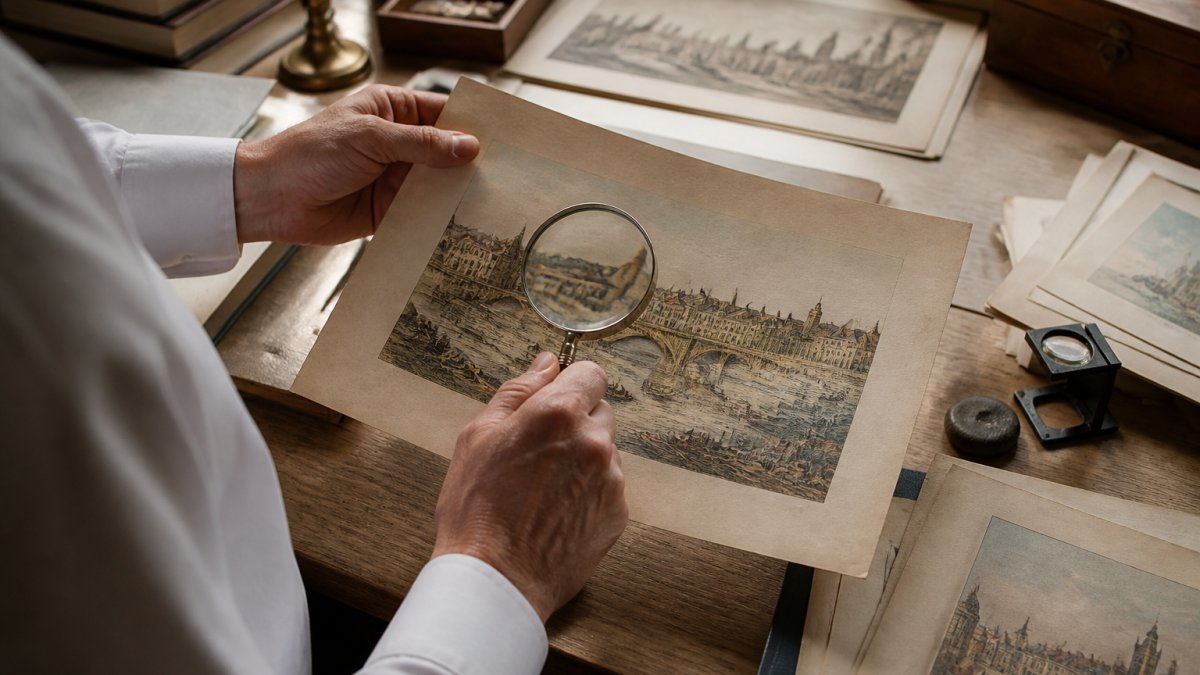
The paper itself tells a story. Original antique prints sit on naturally aged paper with subtle yellowing, foxing (brown spots from oxidation), and a distinct texture modern paper lacks. Hand-coloured originals show slight variations where pigment was applied by brush, not the uniform coverage of modern offset printing, which has perfectly even ink coverage and pristine white paper.
Look for a signature or artist's mark. Most legitimate antique prints carry the artist's name, engraver's mark, or publisher's imprint, which should match documented records. Press your finger gently across the printed area: original engravings and etchings create a slight embossed effect where the metal plate pressed into the paper, a tactile quality reproductions printed on flat presses lack.
Authentication Checklist
Use this checklist when evaluating any antique print:
- Paper shows natural aging: yellowing, foxing, or patina consistent with claimed date
- Signature or artist mark matches documented records of the artist
- Printing technique (engraving, lithography, woodcut) matches the stated method and period
- Hand-colouring (if present) shows brush marks and slight colour variation, not uniform coverage
- Embossed line texture is present when you run your finger across printed areas
- Provenance documentation is available: previous ownership, auction records, or gallery history
- Seller provides detailed condition report describing any damage, restoration, or repairs
- Print size and paper size match documented editions or catalogue records
- Watermark (if visible) corresponds to paper mills active during the claimed period
- Seller offers return policy or authentication guarantee
Antique Prints Versus Reproductions: What You Need to Know
This distinction shapes both your investment potential and your purchase decision, preventing costly mistakes.
Original antique prints are the actual prints created during their stated period using period-appropriate techniques. A copperplate engraving from 1789, for example, was hand-pulled from a copper plate by a printmaker working in London. Each print is unique, with slight variations between pulls due to ink application, paper quality, and hand-colouring differences.
Reproductions are modern copies created using contemporary printing methods, such as digital offset printing or giclée technology. They're honest copies, allowing collectors to own images they love without the expense or rarity constraints of originals. Reproductions do not appreciate in value; they serve aesthetic and educational purposes.
The risk: sellers misrepresenting reproductions as originals through vague language ("vintage-style print"), misleading dating ("inspired by 18th century designs"), or outright fraud. When you see "reproduction" or "modern reprint" clearly stated, that's a trustworthy seller. When a listing uses ambiguous phrases like "antique aesthetic," dig deeper.
Reproductions have legitimate value. Antiquarian Print Shop offers high-quality reproductions of iconic botanical, bird, and historical prints at accessible prices, letting you display beautiful artwork without the investment risk of originals. But they're not originals, and honest sellers say so.
Antique Botanical Prints: A Collector's Focus
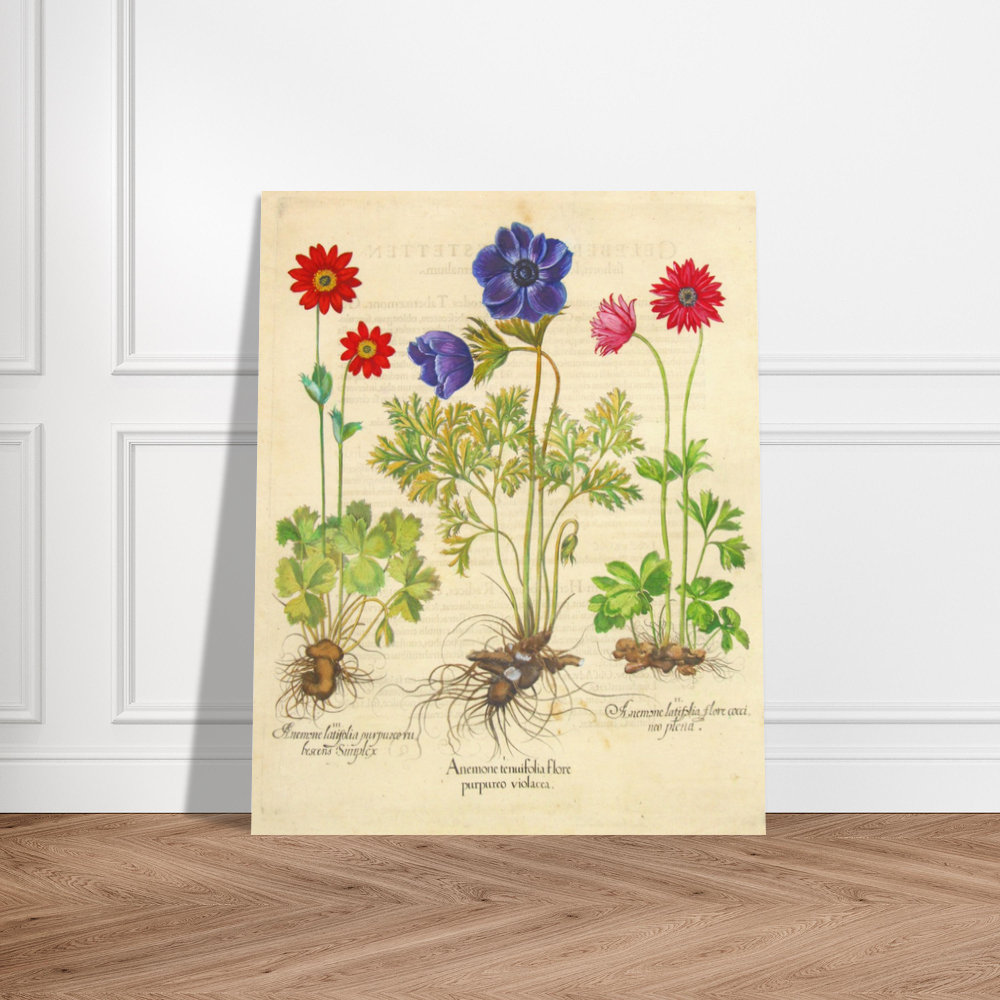
Botanical prints are one of the most sought-after categories of antique printmaking. These hand-coloured engravings or lithographs depicting plants, flowers, and botanical specimens combine scientific accuracy with artistic beauty, created primarily between the 1700s and 1800s as both educational references and decorative art.
The appeal is clear: botanical prints work beautifully in modern interiors, hold historical significance as scientific documents, and have proven resilient as investments. Rare examples by celebrated naturalists or featuring uncommon species command premium prices.
When sourcing authentic botanical prints, verify the artist and publication. A print from Johann Wilhelm Weinmann's Phytanthoza Iconographia (circa 1737-1745), for example, is documented and traceable. Antiquarian Print Shop carries examples like the Ehinomelo Cactos from Phytanthoza Iconographia, a rare original copperplate engraving printed in colour and finished by hand.
Condition matters significantly. Foxing (age spots) is expected on pieces 200+ years old, but extensive staining or mould damage reduces value. Hand-colouring should be vibrant without visible fading, though some mellowing is natural, and the paper should be intact without tears or significant creasing.
Documentation strengthens value. If you can trace a botanical print's publication history, previous ownership, or exhibition record, it commands respect from collectors and dealers. This provenance, the documented history of ownership, separates investment-grade pieces from decorative prints.
Original Antique Prints Online: Buying with Confidence
Online shopping for authentic antique prints requires vigilance, but reputable dealers make it straightforward. Online sources offer access to specialist inventory you won't find locally, detailed product information, and buyer protections through established platforms.
Start with dealers who specialise in antique prints and provide transparent information: artist, date, printing technique, paper size, condition, and provenance. Detailed photography showing the print's front, back, and any maker's marks signals a professional dealer. Vague listings are red flags.
Antiquarian Print Shop exemplifies this transparency. For example, the Kangaroo & Philanger by Karl Joseph Brodtmann is documented as a hand-coloured stone lithograph from circa 1830, with paper dimensions of 33 cm × 23 cm and a condition rating of "very slight age markings." This specificity allows you to make informed decisions.

Verify return policies before purchasing. Reputable online dealers offer 14-30 day returns or money-back guarantees if a print doesn't meet expectations or authentication concerns arise, protection that's essential when buying unseen.
Request additional images if not provided: close-ups of the signature, maker's marks, the back of the print, and overall condition. Professional dealers respond promptly because they have nothing to hide.
Animals, White John, Muricated Lizard Variety, Rare, c1789 →
Price Ranges and Investment Value
Original antique prints vary enormously in price depending on rarity, artist reputation, condition, and historical significance. Understanding these ranges helps you set realistic budgets and evaluate fair value.
Entry-level originals (£150-£400) typically feature well-known artists, common subjects, or pieces with minor condition issues. Antiquarian Print Shop's Architecture by John Carter is priced at £199, a genuine copperplate engraving from circa 1780, hand-coloured, representing excellent value for an authenticated original.
Mid-range originals (£300-£800) include rarer subjects, celebrated artists, or pieces in exceptional condition. The Ostrich by George Shaw, an original copperplate engraving from 1808, is priced at £250. Similarly, the Bivalve Shells by Captain Thomas Brown, a hand-coloured copperplate engraving from 1827, is priced at £250.

Premium originals (£800-£2,000+) feature exceptional rarity, celebrated artists, or historically significant pieces. The Map of Victoria and Port Phillip by John Tallis, created in 1851, is priced at £750. The Map of Western Australia by John Tallis is similarly priced at £750, recording early British settlements including the Swan River Colony.
Investment considerations: Original antique prints have potential for investment value due to rarity. A documented print by a celebrated naturalist like Karl Joseph Brodtmann holds stronger investment potential than an anonymous engraving of a generic landscape.

Reproductions do not appreciate. They serve decorative purposes and provide affordable access to iconic imagery, but they hold no investment value.
| Print Type | Price Range | Investment Potential | Best For |
|---|---|---|---|
| Original, common subject | £150-£400 | Modest | Decorative collectors, budget-conscious buyers |
| Original, mid-range rarity | £300-£800 | Moderate | Serious collectors, interior designers |
| Original, rare/documented | £800-£2,000+ | Strong | Investors, museum-quality collections |
| High-quality reproduction | £30-£150 | None | Decorative purposes, gift-giving |
Buyer Protections and Return Policies
Before any purchase, whether from an online specialist, local gallery, or auction house, understand the seller's buyer protection terms.
Return windows typically range from 14 to 30 days. Reputable dealers like Antiquarian Print Shop allow returns within this period if you're unsatisfied or if the print doesn't meet expectations.
Authentication guarantees matter for significant investments. Established dealers stand behind their attributions: if you later discover a print is misattributed or inauthentic, legitimate sellers will refund your purchase, reflecting their confidence in their authentication process.
Condition documentation protects both buyer and seller. A detailed condition report noting any foxing, staining, repairs, or restoration prevents disputes, giving you recourse if a print arrives with unexpected damage.
Insurance and shipping are usually your responsibility. For high-value prints, request professional packing and insured shipping; some dealers include this, others charge extra. Confirm before purchasing.
Payment security matters. Use credit cards or PayPal when possible, these offer dispute resolution if a seller fails to deliver or misrepresents a print. Wire transfers and bank deposits offer no buyer protection.
According to the Australian Consumer Law, online retailers must provide accurate product descriptions, honour return policies, and offer refunds for goods that are faulty or not as described.
Conclusion
Authentic antique prints offer a tangible connection to art history, potential investment value, and beautiful artwork for your home. Confident purchasing means knowing where to source them, how to verify authenticity, and working with dealers who prioritise transparency and buyer protection.
Antiquarian Print Shop brings together over 1,200 authenticated original antique prints, from rare hand-coloured botanical illustrations by Johann Wilhelm Weinmann to historically significant maps by John Tallis documenting early colonial Australia. Each piece is documented with artist, date, printing technique, and condition assessment. Whether you're building an investment collection or seeking a single statement piece, our curated selection and transparent authentication process ensure you're purchasing genuine artwork with documented provenance.
Frequently Asked Questions
How can I tell if an antique print is authentic and not a reproduction?
Authentic antique prints show specific signs of age: natural paper yellowing and foxing (brown spots), hand-applied colour variations, visible printing technique marks, and a signature or publisher's mark. Reproductions typically have uniform paper colour, perfect registration, and consistent machine printing. Check the paper texture, examine the back for period-appropriate materials, and verify provenance through dealer documentation. Specialist dealers like those offering original antique prints online provide detailed condition reports and authentication details for each piece.
What is the difference between an original antique print and a high-quality reproduction?
Original antique prints are the actual artwork produced using traditional methods like lithography, copperplate engraving, or woodblock printing, often centuries old. Reproductions are modern copies of historical designs printed on contemporary paper using modern techniques. Originals command higher prices, hold investment value, and show authentic aging. Reproductions cost less, lack rarity, and do not appreciate. Originals offer tangible connection to art history; reproductions provide affordable access to iconic designs for interior décor.
Where can I buy original antique prints online safely?
Purchase from specialist dealers who provide detailed provenance, condition reports, and authenticity guarantees. Reputable sellers describe printing technique, date, artist, paper size, and condition explicitly. Look for dealers offering secure payment, return policies, and transparent communication. Avoid listings with vague descriptions or unusually low prices. Specialist online retailers curate collections by category, botanical, bird, maps, and often provide artist biographies and historical context to verify legitimacy.
What should I expect to pay for an authentic antique print?
Prices vary widely by age, rarity, condition, and technique. Reproductions cost significantly less. Investment-grade originals often appreciate over time, particularly rare botanical or natural history prints. Budget for framing and conservation to preserve condition.
Shop Original Prints and discover authenticated antique artwork that enriches your collection and complements your interior space with historical significance and lasting value.