
Where to Find Rare Vintage Fashion Ephemera
Last Updated: November 14, 2026
Quick Summary
You can find rare vintage fashion ephemera through specialist print dealers, auction houses, online marketplaces, antique malls, and estate sales, ranked by reliability for fashion material. Specialist print dealers offer authenticated pieces with provenance, while estate and garage sales yield bargain discoveries with no buyer protection. Search with period terms like fashion plate and chromolithograph rather than broad lifestyle phrases.
- Specialist print dealers rank highest for authenticated fashion plates with strong provenance.
- Use period search terms such as fashion plate, chromolithograph, and hand-coloured engraving.
- Set saved searches and check them weekly because genuine pieces move fast.
- Complete volumes are often worth more broken than bound for their individual plates.
- Store prints flat in acid-free mounts, never rolled, away from light and heat.
Table of Contents
- The Sourcing Channels Worth Your Time, Ranked
- How to Search Online for Authentic Vintage Ephemera
- Antique Fashion Prints and the Dealers Who Know Them
- Vintage Fashion Advertisements: What They Cost and Where They Turn Up
- Old Fashion Magazines, Catalogues and Estate Finds
- Spotting Reproductions and Grading Condition
- Storing and Preserving Paper That Fades
- Building a Fashion Ephemera Collection With Antiquarian Print Shop
- Frequently Asked Questions
The Sourcing Channels Worth Your Time, Ranked
Rare vintage fashion ephemera rewards the buyer who knows which doors to knock on, and vintage fashion ephemera is no exception. Watching where genuine pieces surface and where reproductions quietly outnumber originals is a useful habit for any buyer.
Here is how the channels compare, ranked by reliability for fashion material.
Marketplaces and Auction Houses Side by Side
| Channel | Best For | Typical Condition | Buyer Protection |
|---|---|---|---|
| Specialist print dealers | Authenticated fashion plates | Graded and described | Strong, with provenance |
| Auction houses | Rare single lots | Variable, sold as seen | Moderate, inspection needed |
| Online marketplaces | Browsing and volume | Inconsistent | Weak, buyer beware |
| Antique malls and shops | Hands-on inspection | Fair to good | Negotiable in person |
| Estate and garage sales | Bargain discoveries | Unpredictable | None |
Auction houses can offer rare material but usually require research: request condition reports and read the catalogue notes on restoration.
How to Search Online for Authentic Vintage Ephemera
Search terms decide what you see. Most buyers type "vintage fashion print" and drown in modern reproductions. Precision pays, and the biggest gains come from searching the way dealers and cataloguers describe material rather than the way sellers market it.
Keywords and Terminology That Surface Rare Finds
Use period language in your searches: "fashion plate," "chromolithograph," "hand-coloured engraving," "costume plate," "catalogue page," and specific decades such as "1860s" or "1920s." Add the publisher or artist name where you know it. Sellers who list genuine material tend to use these terms, while reproduction sellers lean on broad lifestyle phrases.
Build a working vocabulary around the format, not just the subject. Fashion material hides under terms such as "mode" (the French and German term for fashion, common in nineteenth-century titles), "costume" rather than "clothing," "toilette" for dress and grooming plates, "manteau" and "robe" for garment plates, and "patron" or "pattern" for sewing material. For advertising, try "trade card," "chromo," "lithograph advertisement," "price list," "wholesale catalogue," and "draper's" or "milliner's" as seller descriptors.
Search Tactics That Beat the Algorithm
A few mechanics separate a productive search from a frustrating one.
- Use date ranges, not just decades. Most platforms let you filter by year or set a custom range. A plate described as "circa 1870" may sit in a listing dated 1875; searching 1865-1880 catches both. Narrow ranges also filter out modern reprints, which cluster in recent listing dates.
- Search the verso and the mount. Dealers often describe the backing board, the mat, or the frame, so terms such as "matted," "laid down," "framed," "unframed," and "loose" help you find pieces where the paper itself is described.
- Use category filters deliberately. Browse the antique and collectible categories rather than general home decor; fashion plates are frequently misfiled under "prints" or "paper" rather than "fashion."
- Try misspellings and alternate spellings. "Bazar" for "Bazaar," "costume" for "costume," and older transliterations of French and German titles surface listings that correct-spelling searches miss.
- Search by publisher and printer. Names such as Jules David, the House of Worth, or the great nineteenth-century lithographic firms appear in good listings and almost never in reproductions.
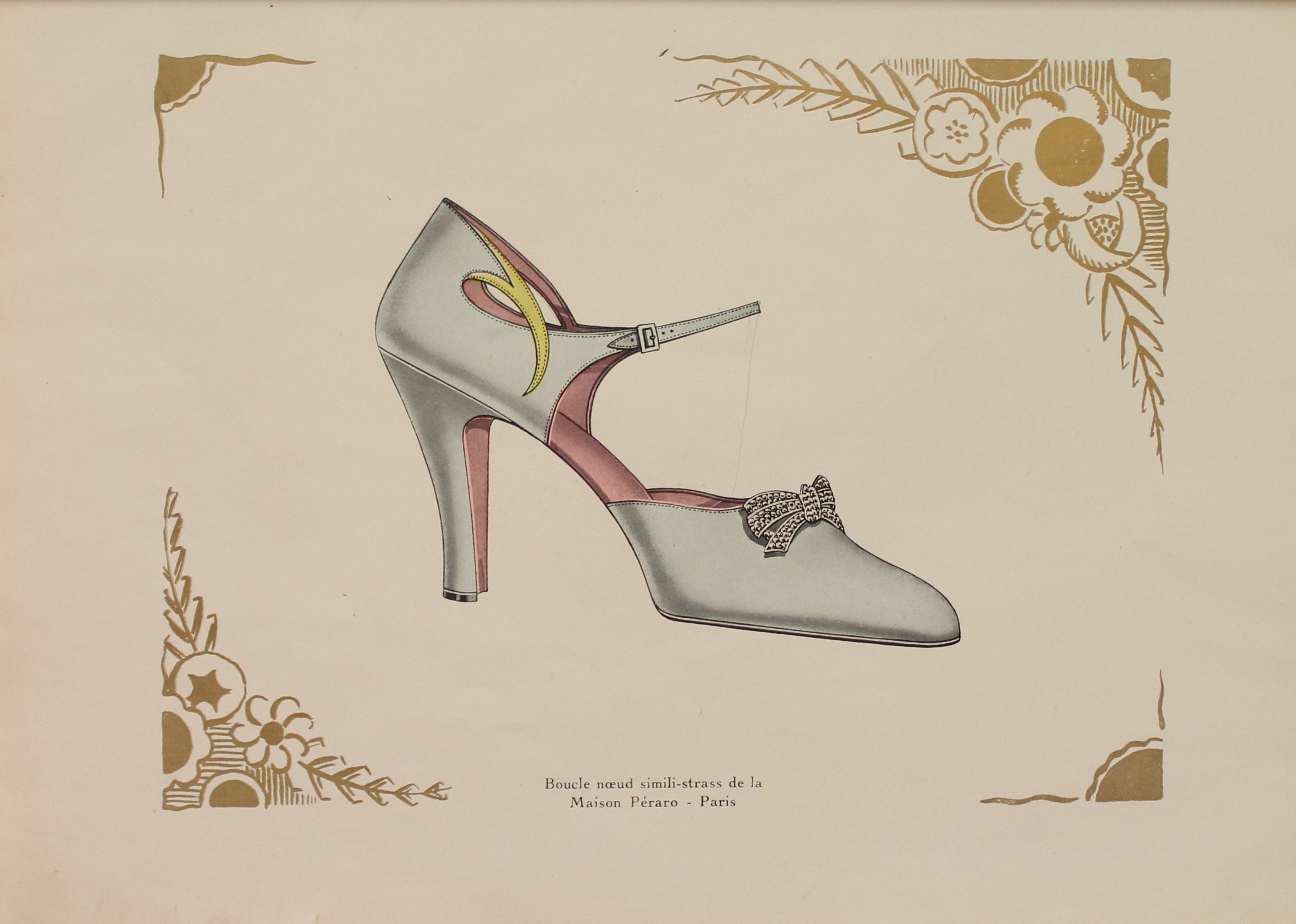
Set saved searches and check them weekly. Genuine pieces move fast, and alerts put you ahead of casual browsers. When a listing claims a date, ask for a photograph of the paper under raking light; surface texture is hard to fake. You can see how such terminology surfaces real stock by browsing a 1920s French fashion ephemera piece in our own catalogue.
Watch out: a listing that uses only broad lifestyle phrases, shows a single flat image, and gives no publisher or date is more likely to be a reproduction than a genuine plate, however attractive the price.
Antique Fashion Prints and the Dealers Who Know Them
Dealers who document a piece's publication, artist, printing method and any restoration in writing give you the clearest starting point for authentication.
Ask three questions before buying: what is the printing technique, has the sheet been trimmed or laid down, and what is the provenance? Honest answers come quickly. Vague ones are your signal to walk.
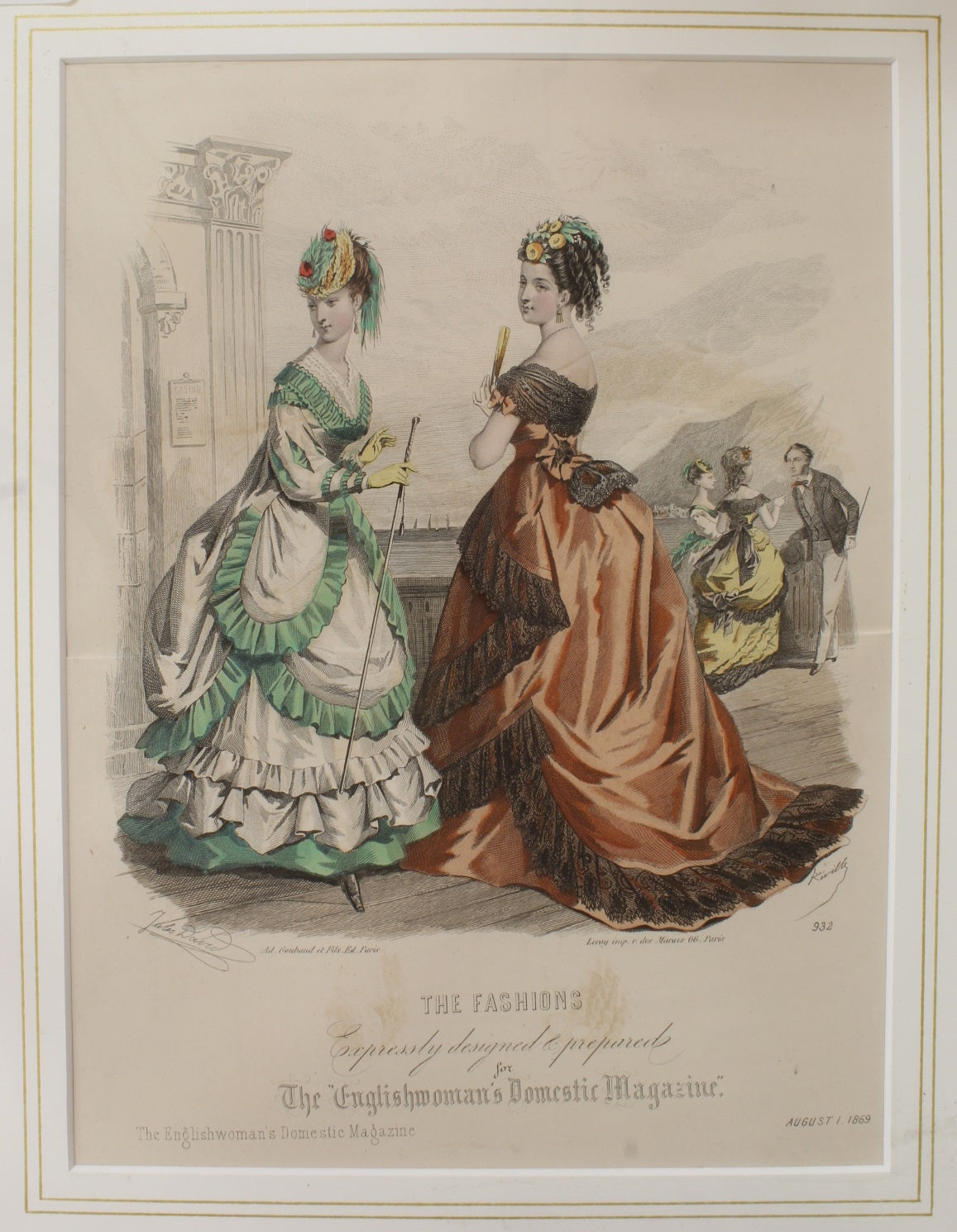
We hold pieces such as The Fashions by Jules David, August 1869, an original hand-coloured steel engraving matted with French lines.
Vintage Fashion Advertisements: What They Cost and Where They Turn Up
Vintage fashion advertisements turn up in bound magazine volumes, trade catalogues and the back pages of periodicals, often priced below decorative plates because buyers overlook them. Condition drives value more than age, but so do five other factors that most listings never spell out.
Where Advertisements Surface
Look in bound volumes of periodicals (the advertising pages are usually at the front and back and are the first to be removed), trade catalogues from department stores and wholesalers, draper's and milliner's price lists, and the loose pages that fall out of damaged volumes. Auction houses sometimes sell advertising lots as job lots, which is where a single rare brand advertisement can be bought cheaply inside a bundle. Specialist dealers tend to separate the strongest examples and price them individually.
Reading Prices Before You Commit
Compare three things first: the same image sold elsewhere, the condition relative to the asking price, and whether the price includes matting. A trimmed or foxed example should cost noticeably less than a clean one. Budget for framing as part of the total.
Beyond that, value turns on six factors. Use them as a checklist when you compare two listings that look similar.
- Age and date certainty. A documented date is worth more than "circa." An advertisement that can be tied to a known publication and issue is easier to value and easier to resell.
- Rarity of the brand or image. Advertisements for well-known houses and for garments rather than accessories tend to be sought after; a striking image of a named designer's dress will outperform a generic hosiery notice.
- Condition. Foxing, staining, trimmed margins, creases, and repairs all reduce value. A clean, untrimmed example in strong colour sits at the top of the range for its type.
- Provenance. A page removed from a named volume, with the publication and date recorded, carries more weight than a loose sheet of unknown origin.
- Completeness. A full page with the publication header, or a complete trade catalogue, is worth more than a clipped fragment, though a fragment with a superb image can still sell well.
- Presentation. Matted and ready to frame commands a premium; the buyer is paying for the mount and the confidence that the piece is stable.
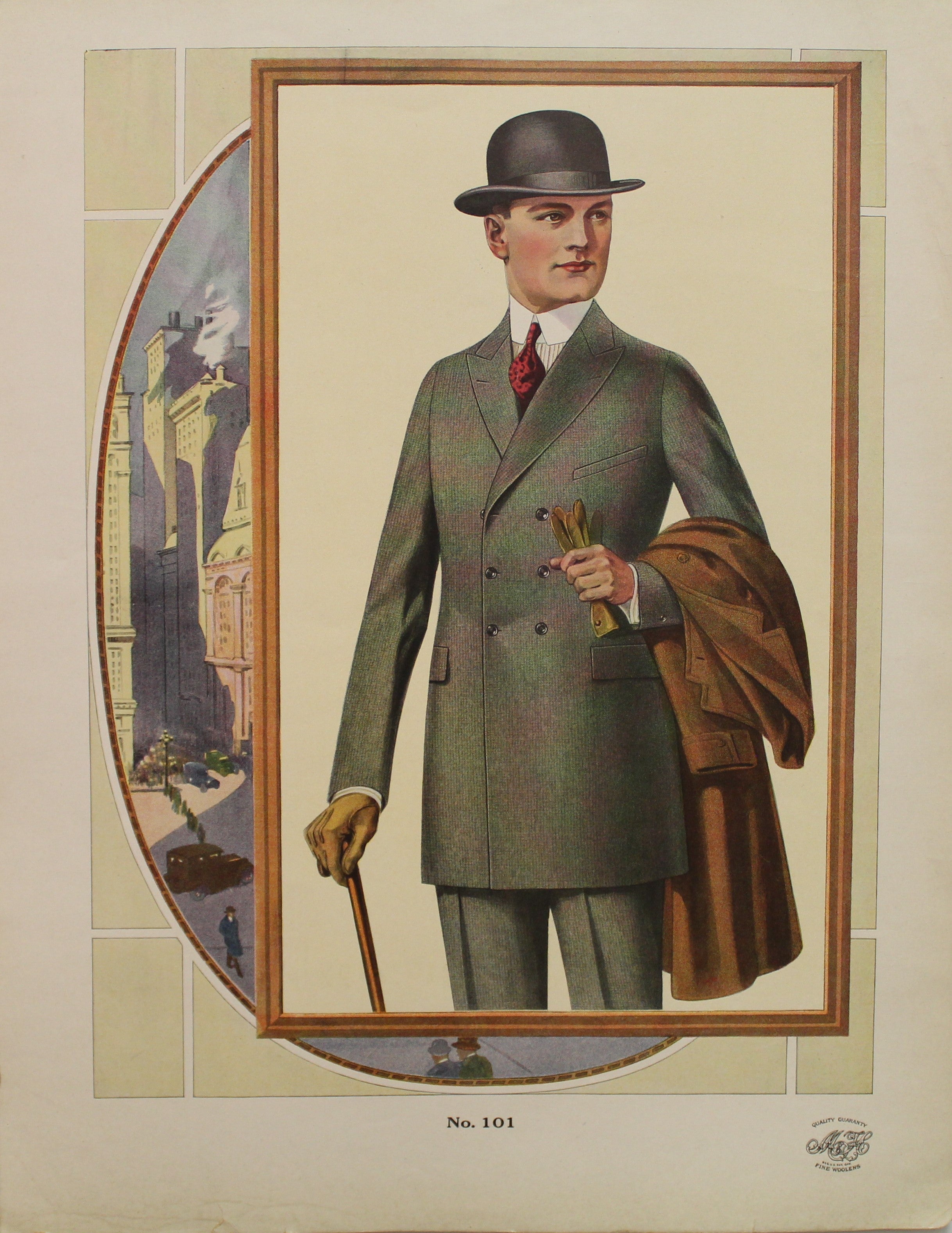
Our Mason and Hanson Autumn Winter catalogue page from 1920-21, a chromolithograph at $130, is a documented example of a dated, publisher-attributed piece. Ask sellers for the source publication; an advertisement with no traceable origin is harder to value and harder to resell.
A Simple Budgeting Method
Set a ceiling before you browse and split it three ways: most of the budget on one strong, documented piece; a smaller share on a second example in very good condition; and a reserve for framing and archival storage. Resist the temptation to buy several weak examples because they are cheap, a single clean, dated advertisement holds value better than a folder of foxed fragments.
Watch out: an advertisement priced far below comparable examples usually has a condition problem the listing has not described, so ask for corner and verso photographs before you commit.
Old Fashion Magazines, Catalogues and Estate Finds
Estate sales and old magazine volumes are where patient collectors strike gold. Arrive early, bring a torch and a loupe, and check the back of frames, where plates are often hidden.
What most guides miss is that complete volumes are frequently worth more broken than bound. A single fashion plate from a damaged 1870s magazine can outperform the whole book. Buy the volume only if the plates inside are clean and untrimmed.
Watch out: damp storage leaves foxing that spreads, so inspect every page edge before you commit.
Spotting Reproductions and Grading Condition
Reproductions are a real risk in this market. Genuine antique paper usually shows faint chain lines or plate marks, slight tonal variation from hand colouring, and ageing consistent with its stated date. Modern reprints look flat, uniform and suspiciously crisp.
Grade condition honestly using four tiers:
- Fine: clean, untrimmed, strong colour, no foxing
- Very good: minor edge wear, negligible spotting
- Good: visible foxing or a small repaired tear
- Fair: trimmed margins, staining or laid down
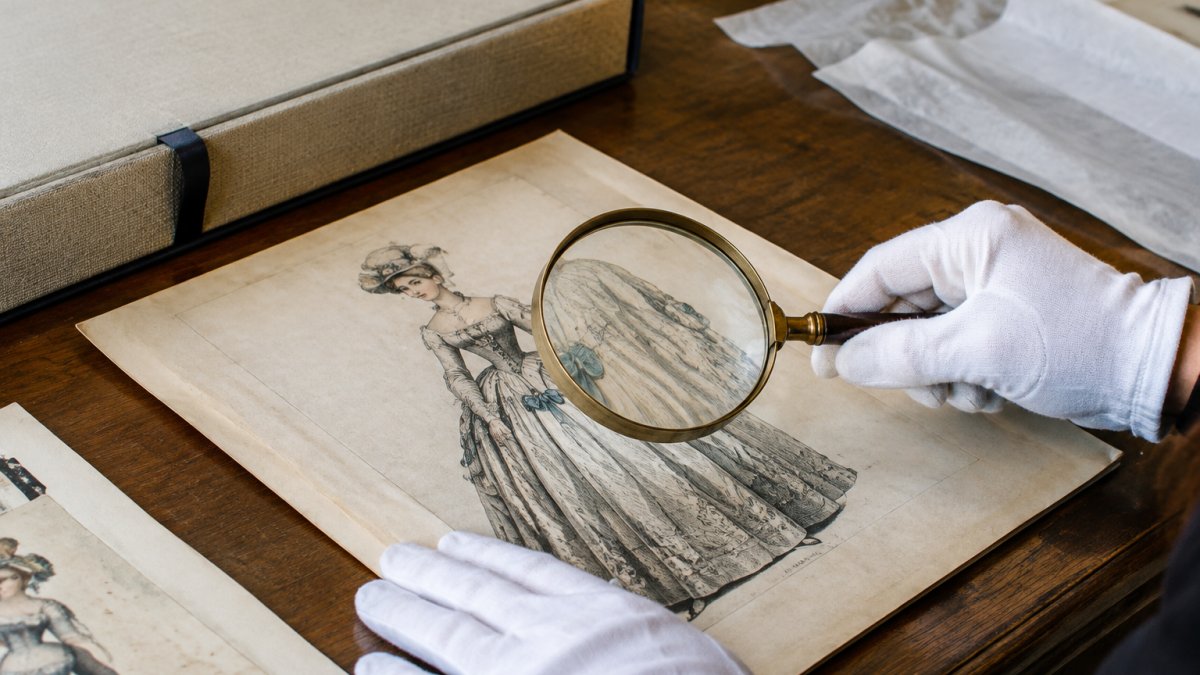
Ask for high-resolution photographs of corners and versos. Reproduction sellers avoid them.
Storing and Preserving Paper That Fades
Light, heat and humidity cause most damage. Keep prints out of direct sun, away from radiators, and in an environment with stable temperature and moderate humidity. Use acid-free mounts and archival tissue; ordinary cardboard and tape stain paper permanently.
Frame with UV-filtering glazing and a spacer so the art does not touch the glass. Store flat, never rolled. Before you put anything in a basement or garage, read the seven basement risks that damage antique prints; the guidance there applies to any paper collection.
Building a Fashion Ephemera Collection With Antiquarian Print Shop
Start with one theme, such as 1860s fashion plates or 1920s menswear advertising, and buy the best example you can afford rather than several weak ones. Scarcity, condition and documentation drive long-term value.
Our curated collection of more than 1,200 authentic original and reproduction prints includes fashion holdings, and custom print sizing is available. If you are weighing whether to collect for pleasure or investment, our guide to antique prints as investment or keepsake sets out the trade-offs plainly.
The challenge is not finding paper; it is finding paper worth keeping. Antiquarian Print Shop can help you buy with confidence, with a curated collection of over 1,200 authentic original prints, traditional etching and lithography, and custom print options in multiple sizing formats. Get started with Antiquarian Print Shop and build a fashion collection that holds its colour, its provenance and its value.
Frequently Asked Questions
What counts as vintage fashion ephemera?
Vintage fashion ephemera covers printed paper made for or about clothing: fashion plates and engravings, department store catalogues, mail-order lookbooks, magazine issues, advertising cards and dress pattern covers. Most collectors treat pre-1979 items as vintage, while anything from the 1800s or earlier sits in the antique bracket. Condition and rarity drive value more than age alone, so a clean 1868 hand-coloured steel engraving can be worth more than a tatty 1950s magazine.
How can I tell whether fashion ephemera is original or a reproduction?
Look at the paper and the printing method. Original hand-coloured engravings show slight colour variation and a visible plate mark, while modern reproductions are usually printed on uniform, bright white stock with flat colour. Ask the seller for the date, technique and provenance, and check whether the price sits in line with authentic vintage ephemera of that era. A dealer who can name the artist, publication and printing method is a safer bet than a listing with vague wording.
Where can I buy old fashion magazines and advertisements?
Auction houses, specialist antique print dealers, antique malls, estate sales and online marketplaces all carry them. Specialist dealers can help with authentication, while estate sales and flea markets can offer lower prices for patient buyers. Always confirm shipping, insurance and return terms before paying.
How should I store and preserve vintage fashion ephemera?
Keep paper away from direct sunlight, which fades inks quickly, and store it flat in acid-free folders or archival sleeves. Avoid attics and garages where heat and humidity swing, and aim for a stable, dry room. Frame originals with UV-filtering glass and an acid-free mount so the paper never touches the frame backing. Handle pieces by the edges or with cotton gloves, and keep reproductions separate from originals to avoid confusion later.