
Are Original Antique Prints Good Investments?
Table of Contents
- Are Original Antique Prints Good Investments? The Honest Answer
- What Makes an Antique Print Valuable
- How to Identify an Original Antique Print
- How Much Are Antique Prints Worth
- Antique Prints Versus Paintings as Investments
- The Real Costs of Ownership: Beyond the Purchase Price
- Financial Return Versus Personal Enjoyment
- Conclusion: Making an Informed Decision
- Frequently Asked Questions
Last Updated: October 12, 2026
Are Original Antique Prints Good Investments? The Honest Answer
Are original antique prints good investments? It depends on your definition of "investment" and what you'll accept in return.
At Antiquarian Print Shop, we work with collectors, interior designers, and investors daily.
The straightforward answer: original antique prints can hold value and appreciate, particularly if rare, in excellent condition, and by established artists.
What matters most is understanding the variables that drive value, the genuine costs of ownership, and whether you're chasing returns or collecting for enjoyment.
What Makes an Antique Print Valuable
Value in original antique prints stems from a combination of factors. No single element guarantees appreciation; together they determine whether a print attracts collectors, holds its price, or appreciates.
Artist Reputation and Historical Significance
The artist behind the print is the first valuation driver. Established artists with documented historical significance command higher prices and maintain value more reliably than obscure ones.
Consider the difference: a copperplate engraving by John Speed, the pioneering English cartographer who created the Theatre of the Empire of Great Britain in 1612, holds institutional recognition and collector demand that an unsigned or minor artist's map simply doesn't.

Conversely, a technically accomplished print by an artist absent from major reference works or exhibition history faces a narrower collector base.
Track record matters too. Artists with multiple significant works, museum representation, and influence on later printmakers maintain stronger value trajectories than minor practitioners.
Rarity, Edition Size, and Scarcity
Rarity is the second major value driver, depending on how many copies were produced and how many survive today.
Limited editions from later periods (19th and 20th centuries) carry documented edition numbers: a lithograph from an edition of 50 is scarcer than one from 500.
Scarcity alone doesn't guarantee value: a rare print by an unknown artist may remain unsold for years. But rarity combined with artist reputation creates genuine demand.
Print Quality, Materials, and Archival Standards
The technical execution and materials of an original antique print affect both its longevity and collector appeal.
Hand-coloured copperplate engravings, where an artist applied watercolour by hand after the print was struck, are typically valued higher than uncoloured versions.
Paper quality and composition matter for preservation.
Prints created using traditional techniques, copperplate engraving, lithography, woodcut, etching, are generally valued more highly than later mechanical reproductions.
How to Identify an Original Antique Print
Distinguishing a genuine original antique print from a later reproduction or facsimile is essential before committing money, since the value difference can be substantial.
Distinguishing Original Prints from Reproductions
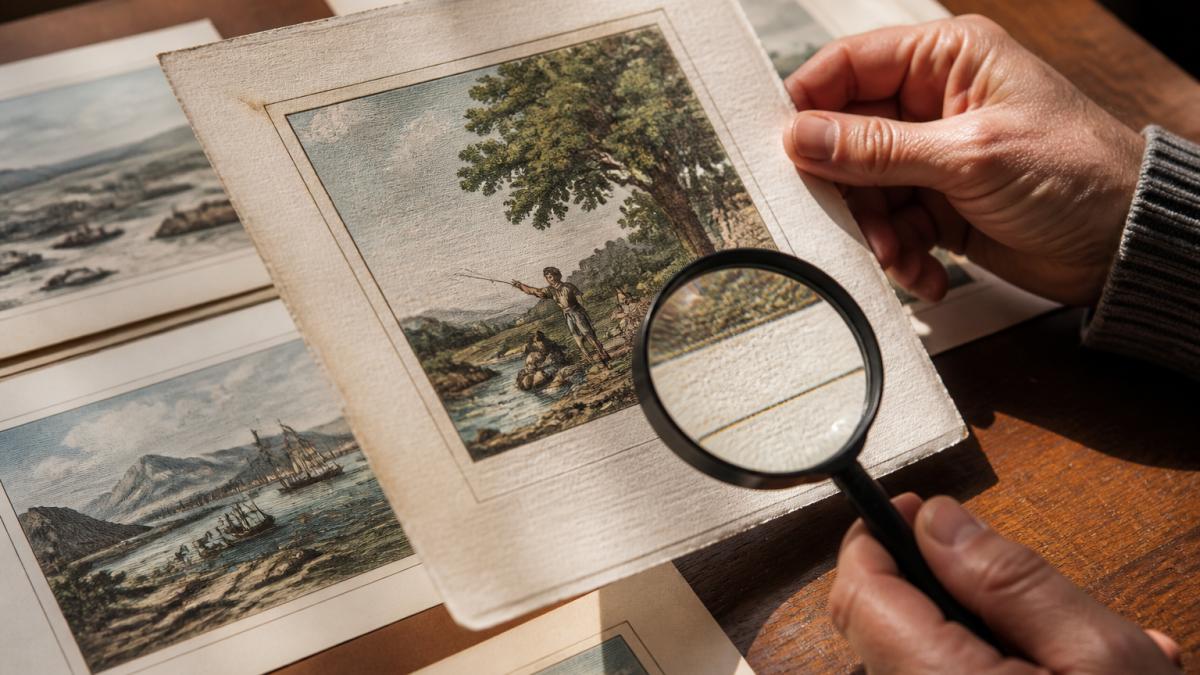
Original prints carry physical markers that reproductions typically lack or simulate imperfectly.
First, examine the paper. Original antique prints were printed on laid paper: hold the print to light and you'll see a regular pattern of parallel chain lines and perpendicular laid lines running through the structure, nearly impossible to replicate convincingly.
Second, look at the ink.
Examine the edges and margins. Original antique prints often show foxing (small brown spots from iron particles oxidising over centuries) or age-toning (overall yellowing or browning).
Check for wear consistent with age. Prints handled, stored, and displayed for centuries show subtle creasing, minor tears, and wear patterns reproductions don't replicate convincingly.
Provenance and Authentication
Provenance, the documented ownership history of a print, provides critical evidence of authenticity and value.
Original antique prints with clear provenance (documented previous owners, exhibition history, or institutional records) command premium prices and sell more readily than prints with unknown origins.
Authentication from established dealers, auction houses, or conservation experts adds credibility. Reputable dealers like Antiquarian Print Shop document the technique, date, artist, and condition of each original print.
Be sceptical of prints without documentation.
How Much Are Antique Prints Worth
Pricing for original antique prints varies enormously based on artist, rarity, condition, and current market demand. Understanding the range helps you evaluate whether a price is reasonable.
Condition and Its Impact on Price
Condition is perhaps the single most important variable in resale value.
Original prints in very good condition with minimal foxing and no tears typically hold value and may appreciate modestly.
Prints with visible damage, tears, creases, staining, or significant foxing face reduced demand and lower resale prices.
Conservation and restoration can improve condition, but costs are substantial and don't always return full value.
Understanding the Resale Market
The resale market for original antique prints is narrower and slower than many investors expect.
Original prints sell through specialist dealers, auction houses, and online platforms. Sales velocity is lower than for stocks, bonds, or property.
Map, Speed John, Montgomery Shire, c1610 →
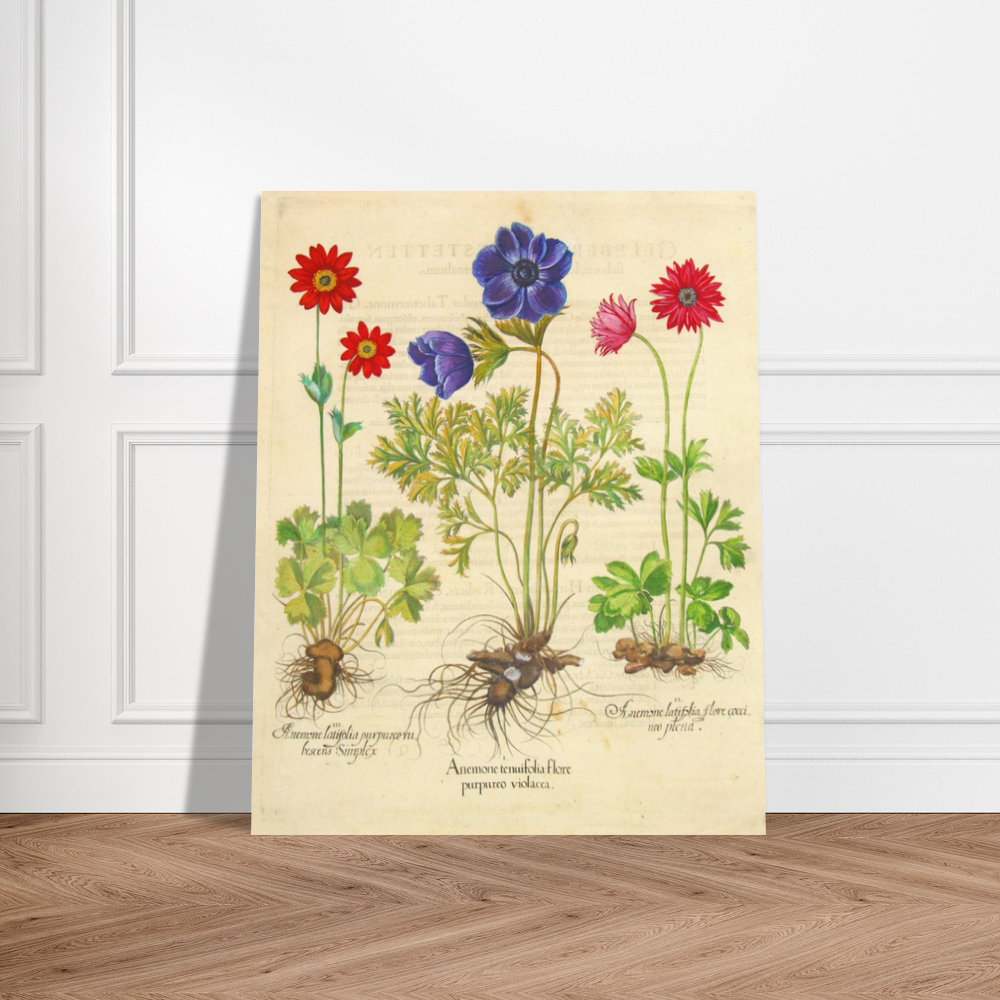
Auction results vary widely. Botanical prints from the famous Hortus Eystettensis collection by Basilius Besler command premium prices, with originals regularly selling for $6,000, reflecting their rarity and institutional significance.

However, auction prices don't reflect what you'll actually receive after costs. Private sales through dealers may involve a smaller commission but take longer to arrange.
Online resale platforms charge listing and transaction fees that further reduce net proceeds.
Antique Prints Versus Paintings as Investments
Original antique prints and original paintings occupy different market positions, and the comparison matters for investment decisions.
Original paintings typically appreciate more reliably than prints, particularly works by established artists. Paintings are perceived as unique, whereas prints are understood as multiples, even original prints exist in multiple impressions.
However, paintings come with higher entry costs, greater authentication complexity, and more substantial conservation requirements.
Prints offer advantages for collectors with limited budgets.
From a pure investment standpoint, original paintings have historically outperformed prints. But prints offer better value for collectors seeking authentic original art without premium pricing.
The Real Costs of Ownership: Beyond the Purchase Price
This is where most investment discussions about antique prints fall short. The purchase price is only the beginning.
Conservation, Framing, and Storage
Properly preserving an original antique print requires investment beyond the initial purchase.
Framing is essential. An unframed print deteriorates rapidly through exposure to light, dust, and humidity fluctuations.
Storage conditions matter significantly.
If a print shows deterioration, foxing, staining, or tears, professional conservation becomes necessary. Work by a qualified paper conservator is a significant expense that reduces net investment returns.
Insurance and Transaction Costs
Original antique prints of significant value should be insured. Insurance typically runs of insured value annually.
Transaction costs eat into returns substantially. Buy a print and sell it 10 years later, and you've faced:
- Initial purchase costs (shipping, handling)
- Framing and archival storage
- Insurance over 10 years
- Selling costs (auction fees, shipping)
In many scenarios, ownership costs exceed appreciation gains.
Financial Return Versus Personal Enjoyment
This distinction separates successful antique print collectors from disappointed investors.
If your primary motivation is financial return, original antique prints are a poor choice.
If your motivation is personal enjoyment, owning beautiful, historically significant original art, displaying it at home, and building a collection around your interests, antique prints make far more sense.
Many successful collectors frame their purchases this way: "I'm buying this print because I love it and want to display it. If it holds value or appreciates, that's excellent.
Conclusion: Making an Informed Decision
Are original antique prints good investments? They can be, but only if you understand the real variables and accept the limitations.
Original antique prints by established artists, in excellent condition, with clear provenance and genuine rarity, can appreciate modestly over time.
At Antiquarian Print Shop, we help collectors distinguish authentic originals from reproductions, source prints with documented provenance, and build collections aligned with their actual goals. Our curated selection of over 1,200 authentic original antique prints, including rare botanical engravings, historical maps, and hand-coloured works, offers genuine investment-grade pieces alongside more affordable originals for personal enjoyment.
The strongest approach combines realistic financial expectations with genuine passion for the art itself.
The decision to invest in original antique prints ultimately hinges on whether you're seeking financial returns or personal enrichment.
Frequently Asked Questions
Can original antique prints actually increase in value over time?
Original antique prints can appreciate, but results vary significantly. Prints by established artists with strong collector demand, particularly rare or limited-edition pieces in excellent condition, have historically shown long-term appreciation. However, appreciation is not guaranteed and depends heavily on artist reputation, rarity, and market trends. Many prints remain stable in value or depreciate if demand declines. Treat appreciation as a possibility rather than an expectation, and prioritise pieces you genuinely enjoy owning.
What's the difference between an original antique print and a high-quality reproduction?
Original antique prints are created through traditional methods like copperplate engraving, lithography, or woodcutting, typically centuries old, with hand-colouring applied during or shortly after printing. Reproductions are modern copies created from original designs, printed on new paper using contemporary techniques. Originals show characteristics like paper aging, hand-colouring variations, and printing irregularities. Reproductions offer affordability and accessibility without investment risk. Originals hold potential resale value and historical significance; reproductions do not. Authenticity and provenance documentation are essential when purchasing originals.
How do condition and preservation affect what antique prints are worth?
Condition is one of the most significant factors in valuation. Prints with foxing (brown age spots), fading, creasing, or water damage command lower prices than those in very good condition. Archival-grade framing and storage, using acid-free materials and protecting from direct sunlight and humidity fluctuations, preserves value and prevents further deterioration. A print in excellent condition can be worth several times more than the same print heavily damaged. Conservation work can improve appearance but may reduce historical authenticity and resale value, so professional assessment is advisable before attempting restoration.
Are antique prints better investments than paintings?
Antique prints and paintings each have distinct investment profiles. Prints are typically more affordable, more liquid in the resale market, and easier to store and display. Paintings often appreciate faster but require significant capital, specialist insurance, and climate-controlled storage. Prints offer lower entry costs and broader accessibility; paintings suit collectors with larger budgets and space. Neither guarantees financial return. For most collectors, the choice depends on budget, space, personal taste, and whether you prioritise enjoyment or potential appreciation. Diversifying across both mediums can reduce investment risk.
What printmaking techniques affect the value of antique prints?
Traditional techniques like copperplate engraving, hand-coloured lithography, and woodcuts are highly valued for their craftsmanship and historical significance. Copperplate engravings, particularly those hand-coloured by the printer or artist, command premium prices due to labour intensity and scarcity. Limited-edition prints or those from early editions of significant works are more sought after. Mass-produced later techniques generally hold less collector value. Understanding the technique helps authenticate originals and assess quality. Prints created through labour-intensive methods with smaller surviving quantities typically appreciate better than those produced in larger volumes.
How can I verify that an antique print is actually original and not a later reproduction?
Examine the paper: originals show age-toning, foxing patterns, and period-appropriate laid or wove paper structure. Check the printing technique, copperplate engravings display characteristic plate marks and ink irregularities. Hand-colouring on originals shows natural variation and sits slightly above the paper surface. Inspect for a cartouche or signature matching documented records. Request provenance documentation tracing ownership history. Compare the print against reference catalogues for the artist and work. Professional authentication by a print specialist or dealer is advisable for significant purchases. Reputable dealers like Antiquarian Print Shop provide detailed condition reports and authentication.
What are the hidden costs of owning original antique prints as investments?
Beyond purchase price, expect costs for archival-grade framing, conservation if damage occurs, specialist insurance, climate-controlled storage, and transaction fees when selling. Framing protects value but adds ongoing expense. If selling, auction houses or dealers charge commissions. Tax implications on capital gains may apply. Storage in poor conditions can cause irreversible damage, erasing investment value. Budget for these costs when calculating net returns. Many collectors find that total ownership costs significantly reduce financial gains, making enjoyment value as important as potential appreciation.
Should I buy antique prints primarily for investment or for enjoying them at home?
The best approach balances both. Original antique prints can offer modest long-term appreciation, but financial returns are uncertain and often modest after accounting for costs. Purchasing pieces you genuinely love for your living space ensures satisfaction regardless of resale value. If investment is the primary goal, research artist reputation, rarity, and market trends carefully before buying. Many collectors find the greatest value in owning beautiful, historically significant artworks that enrich their homes while potentially gaining modest appreciation. Treat any financial return as a bonus rather than the main reason for purchase.