
Etching vs Engraving: Key Differences Explained
Table of Contents
- What Is Etching vs Engraving: The Core Distinction
- How to Identify an Etching in Antique Prints
- How to Identify an Engraving in Antique Prints
- Intaglio Printmaking: The Foundation of Both Techniques
- Etching vs Lithograph: When to Choose Each Method
- Visual and Durability Differences That Matter to Collectors
- Investment Value and Authenticity
- Frequently Asked Questions
Last Updated: October 20, 2026
What Is Etching vs Engraving: The Core Distinction
Understanding etching vs engraving matters if you're collecting antique prints or investing in original artworks. At Antiquarian Print Shop, we've guided countless collectors through this distinction, and it shapes how you value, authenticate, and care for prints. The core difference: engraving cuts directly into the plate with a tool, while etching uses acid to bite the design into metal.
Engraving: Direct Cutting Into Metal
Engraving is the older technique, dating back to the 15th century. An engraver uses a burin, a sharp, angled cutting tool, to push directly into a copper or steel plate, controlling depth and line weight through hand pressure and tool angle.
What makes engraving distinctive is the labour involved. Every line requires deliberate, controlled pressure, and a slip of the burin leaves a permanent mark.
Etching: Chemical Resistance and Acid
Etching emerged in the 16th century as a faster alternative. An artist covers a copper or steel plate with an acid-resistant ground, draws through it with a pointed needle, then submerges the plate in acid (traditionally nitric, now often ferric chloride), which eats the exposed lines.
Etching offered creative freedom engraving did not: corrections were possible, lines could be burnished out and reworked, and the faster process allowed experimental mark-making. The chemical process gave etching softer edges, more organic line quality, and richer tonal effects through varied acid-bite times.
How to Identify an Etching in Antique Prints
The first clue lies in the line quality. Etched lines often appear softer at the edges, with slight irregularities where acid worked unevenly into the metal.
The burr in an etching is minimal or absent. Since acid creates the line rather than a cutting tool, there's no raised metal edge to scrape away, so etched prints often feel smoother than engravings.
Historically, etching became associated with artistic printmaking. Many Old Masters, Rembrandt, Goya, Dürer, favoured etching for rapid experimentation and expressive mark-making.
How to Identify an Engraving in Antique Prints
Identifying an engraving is less about one killer clue and more about a consistent set of criteria applied in the same order every time. Most misidentifications happen because a collector looks at line quality alone, or relies on subject matter, without checking the plate mark, paper and printing pressure together. A practical sequence: plate mark, line character, burr traces, ink behaviour, paper and impression quality.
Start with the plate mark and the reverse
Both etchings and engravings are intaglio, so both should show a plate mark, the rectangular indentation left by the bevelled plate edge under press pressure. On an engraving it is usually crisp and well defined. Turn the print over: intaglio printing leaves a subtle embossment on the reverse where paper was forced into the recessed lines. A planographic print such as a lithograph will not show this, one of the fastest ways to rule lithography out before comparing line quality.
Read the line character
Engraved lines are cut with a burin, so they tend to be uniform in depth and weight, with crisp edges and a controlled taper where the tool entered and exited.
Etched lines, by contrast, are bitten by acid through a resist. They tend to have softer, slightly irregular edges, sometimes with a faint feathering or halo where acid worked unevenly into the metal.
Look for burr traces and tool marks
A burin throws up a burr, a raised metal edge along the cut. Engravers scrape this away before printing, but the removal often leaves faint traces: a subtle texture or short parallel marks along the line, best seen under raking light or low magnification. These traces are a strong engraving indicator and rarely seen in etchings. Drypoint, also intaglio, deliberately leaves the burr in place and prints with a rich, velvety edge, so a heavy, fuzzy line suggests drypoint before engraving.
Check ink behaviour and impression quality
Engravings often show slightly sharper ink edges because the cut line holds ink cleanly, while etched lines can show a softer ink edge where the acid bite is irregular. Early impressions are crisper; later impressions from a worn plate show flattened lines and loss of fine detail. That matters for value as much as identification, because a late impression of an engraving can look softer and be mistaken for an etching.
Use subject and date as supporting evidence, not proof
Engraving dominated maps, architectural plans, currency, official documents and formal portraits for centuries because precision and plate durability suited repeat production. A county map with fine geographical detail, an architectural elevation or a formal state portrait is statistically more probable as engraving. But subject is supporting evidence only, a map can be etched, and an artist print can be engraved.
Material-specific guidance
The choice between etching and engraving, and the way each looks, changes with the substrate in the industrial sense as well. On glass, etching is often a surface frost or shallow mark, while engraving cuts a visible groove that catches light. On metal, laser engraving typically removes material to a measurable depth, whereas laser etching may only alter the surface colour or oxide layer.
A quick decision path
- Does it have a plate mark and a subtly embossed reverse? If no, rule out intaglio and consider lithography or a reproduction.
- Are the lines uniform, crisp and tapered, with regular hatching? Lean engraving.
- Are the lines softer, variable and more drawn? Lean etching.
- Do you see faint burr-removal texture under raking light? Strengthen the engraving call.
- Is the impression crisp with strong contrast, or flat and worn? Early versus late impression affects both identification confidence and value.
Used in that order, these criteria give you a defensible identification rather than a guess, and translate directly into how you assess authenticity and investment potential.
Intaglio Printmaking: The Foundation of Both Techniques
Both etching and engraving are intaglio processes, a term describing how the image is printed, not how it's made. In intaglio printing, the image sits below the plate surface, recessed into grooves.
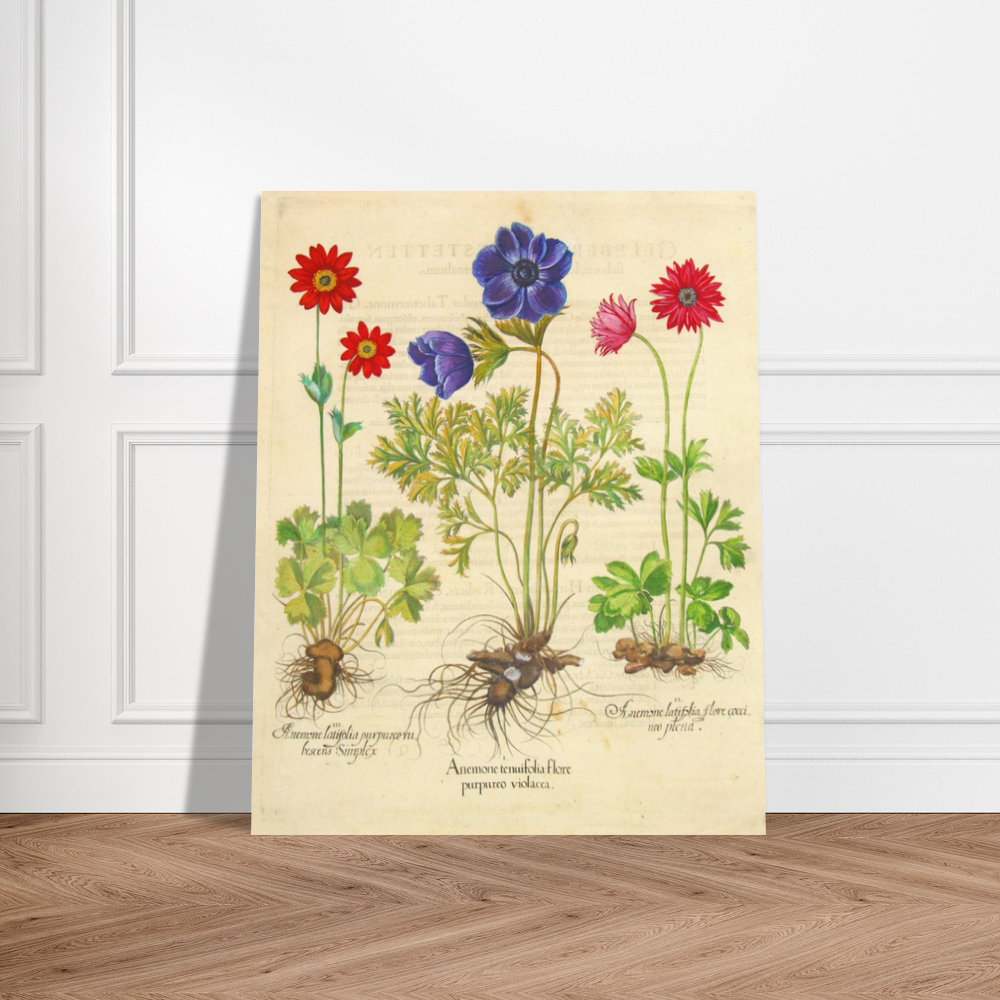
Botanical, Andrews Henry, Erica Oblique, Copperplate Engraving, 1797 →
The intaglio family also includes aquatint (tonal areas through acid-bitten dots), drypoint (a needle creates a burr), and mezzotint (the plate is roughened then burnished smooth for highlights).
Etching vs Lithograph: When to Choose Each Method
Most comparisons of etching and engraving blur two different worlds: traditional intaglio printmaking and modern industrial marking. That blurring is the single biggest source of contradictory claims online. In printmaking, etching and engraving are both intaglio techniques, the image sits in recessed grooves and is printed under pressure. In industrial marking, the same words describe how a surface is marked, not how a print is pulled.
The printmaking sense: intaglio versus planographic
In printmaking, etching and engraving share a family. Both are intaglio: the printer inks the whole plate, wipes the surface clean, and forces damp paper into the recessed lines under a roller press, which is why both produce a plate mark and a subtle embossment on the reverse.
That structural difference drives the visual difference collectors notice. Engraved lines are cut deliberately with a burin, so they tend to be uniform, crisp and closely controlled.
The industrial sense: marking, not printmaking
Outside printmaking, the words describe how a mark is made on a substrate. Laser engraving typically removes material, the beam vaporises or ablates the surface to a measurable depth, producing a tactile, recessed mark.
This is why you will see claims that etching is shallower than engraving and claims that etching is deeper, sometimes on the same page.
A consistent comparison across both senses
| Criterion | Printmaking etching | Printmaking engraving | Industrial etching (typical) | Industrial engraving (typical) |
|---|---|---|---|---|
| How the mark is made | Acid bites exposed metal through a resist | Burin cuts directly into the plate | Surface change, oxidation or shallow removal | Material removal to a measurable depth |
| Typical depth | Variable, set by acid time | Controlled by hand pressure and tool angle | Often shallow | Usually deeper and tactile |
| Line or mark character | Softer edges, variable weight, expressive | Crisp, uniform, precise | Fine surface contrast, low relief | Visible recess, tactile edge |
| Common substrates | Copper, steel, zinc | Copper, steel | Glass, coated metal, some plastics | Metal, wood, glass, acrylic, leather |
| Durability of the mark | Plate stable; print vulnerable to paper issues | Plate stable; print vulnerable to paper issues | Depends on coating and substrate | Generally robust because material is removed |
| Typical use | Artist prints, old master prints | Maps, portraits, formal illustration, currency | Branding, serial numbers, decorative glass | Signage, trophies, industrial part marking |
When to choose each
For a collector, the choice is not really etching versus lithograph, it is whether the work is intaglio or planographic, because that determines the plate mark, embossment and line character you are assessing. If you want the finest linear detail and the tactile evidence of intaglio printing, look to etching or engraving. If you want broader tonal effects and a painterly surface, lithography is the relevant comparison.
Visual and Durability Differences That Matter to Collectors
When you hold an etching and an engraving side by side, the differences become tactile.
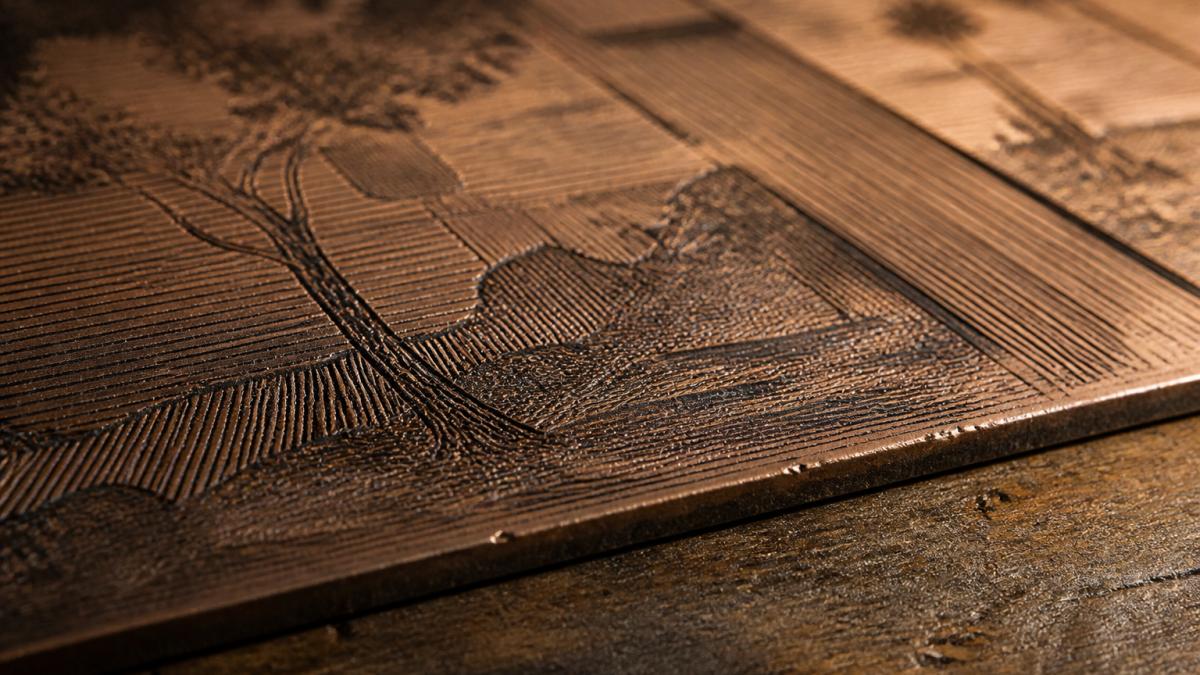
Durability favours engraving. Because the lines are cut directly into hard metal and the burr is removed, the image is extremely stable, and engravings from the 16th century remain sharp and clear today.
Both techniques produce prints that last centuries if properly stored. Avoid direct sunlight, maintain stable humidity (around 45-55%), and keep prints away from acidic materials.
Investment Value and Authenticity
The technique alone doesn't determine value, but it influences how collectors assess authenticity and rarity. Original engravings and etchings command premium prices because they are one-off prints from hand-worked plates.
At Antiquarian Print Shop, we verify authenticity through several markers: the paper type and age, the quality of the impression, the presence of a maker's mark or signature, and the technique itself. Our collection includes pieces like the Botanical, Andrews Henry, Erica Oblique, Copperplate Engraving, 1797 at $180, which offers authentic 18th-century copperplate work at accessible investment levels, alongside museum-quality pieces like the Map, Morden Robert, County Map, Northumberland, c1695 at $1,500 for collectors seeking significant historical and artistic value.


Reproductions are common, and they matter for investment. A modern facsimile or photographic reproduction has minimal investment value, though it offers affordable access to iconic imagery.
Distinguishing etching vs engraving transforms how you collect and value antique prints. Shop our collection of original antique prints created through traditional techniques like etching and engraving, and discover pieces that connect you directly to art history.
Frequently Asked Questions
How can you tell if an antique print is an etching or an engraving?
Examine the lines closely under magnification. Engraved lines appear uniformly clean and sharp, created by a burin cutting directly into the metal plate. Etched lines often have softer, slightly irregular edges with a finer quality, as they result from acid eating away the metal. Look at the burr (raised metal edge): engravings typically show less burr. The paper texture and ink coverage also differ, etchings often hold ink in the line itself, creating a slightly raised appearance, while engravings produce crisper, flatter lines. Original prints from the 18th and 19th centuries, such as the copperplate engravings in our collection, show these characteristics distinctly.
Which technique is more valuable: etching or engraving?
Value depends on rarity, artist reputation, condition, and age rather than the technique alone. Both original etchings and engravings from the 17th-19th centuries command significant prices. Engravings, particularly copperplate engravings like the botanical print by Henry Andrews (AUD $180) or historical maps by Robert Morden (AUD $1,500), are prized for their precision and permanence. Etchings are valued for their artistic expressiveness and the artist's hand visible in the mark. Rarity and provenance matter more than technique, an original etching by a celebrated artist will outvalue a common engraving by an unknown maker.
What is the difference between etching and sketching?
Etching is a printmaking technique where acid bites into a metal plate to create an image that can be printed multiple times. Sketching is drawing by hand with pencil, charcoal, or ink on paper, producing a single original artwork. Etchings are intaglio prints, the recessed lines hold ink and transfer the image to paper under pressure. Sketches are direct marks on paper with no printing process. Etchings have a distinctive quality: fine detail, and the ability to produce consistent editions. Sketches are unique, unrepeatable works. Both appear in antique collections, but etchings are valued for their technical mastery and reproducibility.
Is laser engraving the same as traditional engraving?
No. Traditional engraving, as seen in historical antique prints, uses a burin (hand tool) to cut directly into a metal plate, requiring significant skill and physical control. Laser engraving uses focused heat to vaporise or mark material, producing precise marks without hand-cutting. Traditional engraving creates the burr and characteristic line quality valued in antique prints. Laser engraving produces clean, uniform marks but lacks the depth variation and artistic character of hand-engraved work. For collectors seeking authentic historical prints, traditional copperplate engraving, such as the 18th-century botanical and map engravings we stock, represents the original craft and carries far greater historical and investment significance than modern laser-marked reproductions.